
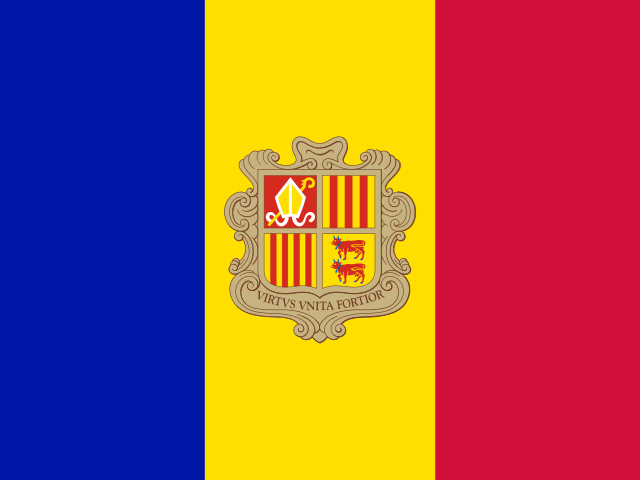
Andorra is a tiny Pyrenean principality wedged between France and Spain, and connecting here works very differently from its neighbors. Andorra is not a member of the European Union, so the EU “roam-like-at-home” rules do not apply and roaming on a French or Spanish plan can be expensive. For skiers and shoppers visiting Andorra la Vella or the Grandvalira slopes, it pays to plan your data ahead.
Networks & coverage
Andorra has a single mobile operator: the state-owned Andorra Telecom, which runs the Mobiland network. There is no competing carrier, so every SIM and eSIM you use in the country ultimately rides Mobiland’s 4G LTE (and growing 5G) infrastructure. Coverage is excellent in the valleys, towns and main ski areas, though signal can fade in remote high-mountain terrain.
eSIM or physical SIM?
A travel eSIM is the most convenient choice for short visits, but check the fine print: because Andorra is outside the EU, many “Europe” eSIM bundles silently exclude it. Brands such as Airalo, Holafly, Saily, Nomad and Ubigi sell dedicated Andorra eSIMs that connect to Mobiland. If you prefer a physical SIM, Andorra Telecom sells a tourist Prepagament card from its Andorra la Vella office, which requires showing your passport or ID.
Data, calls & messaging
Most travel eSIMs are data-only, so use WhatsApp, Telegram or iMessage for calls and texts. The local Andorra Telecom prepaid card includes a local number with national minutes and SMS, but international calls are billed at a steep per-minute rate. For pure browsing, maps and messaging apps, a data eSIM is more than enough.
How much data do you need?
A long weekend of maps, messaging and social media is comfortable on 1-3 GB. A week-long ski trip with photo and video uploads is better served by 5-10 GB. If you plan to stream or tether a laptop, lean toward 10 GB or an unlimited Holafly day-rate plan.