
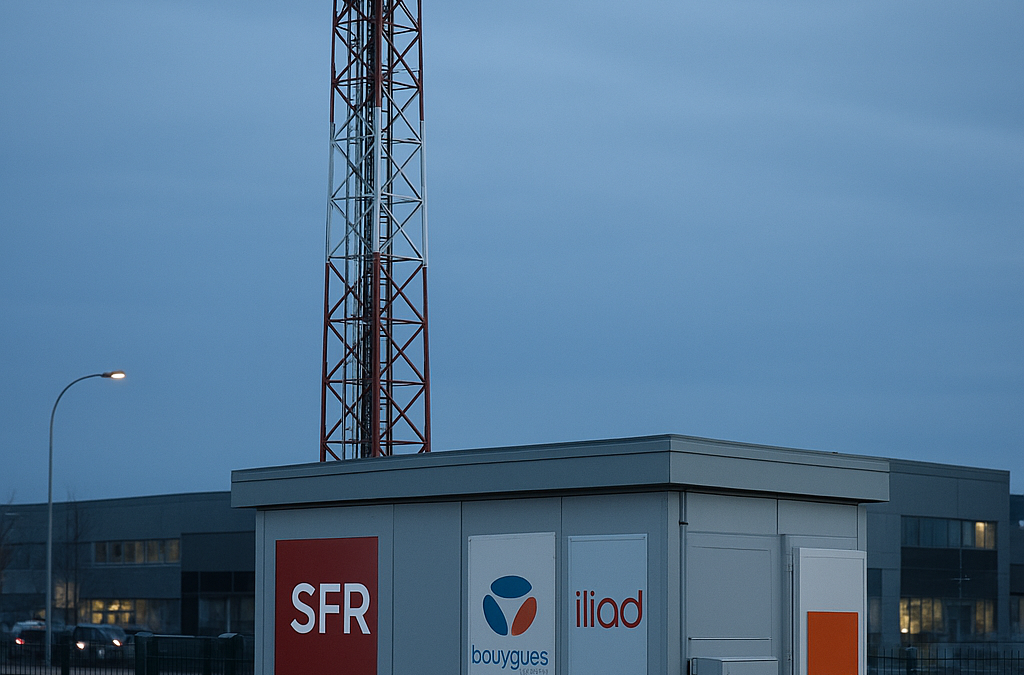
Bouygues Telecom, Iliad and Orange have submitted a proposal for the acquisition of SFR’s assets in France at a proposed price of €20.35bn. The plan would reduce the number of mobile service providers in France from four to three if regulators approve the deal.
French regulators are starting detailed investigations after receiving the proposal. The acquisition is framed as an approach where the buyers would split the target’s assets rather than one operator buying the full business.
From four to three MNOs via an asset split
In France, the proposal is built around three MNOs taking the number-four operator and splitting it. SFR is described as the mobile provider of Altice France, and the submission targets SFR’s assets rather than a clean change of control to a single buyer.
If the transaction proceeds, the number of mobile service providers would fall from four to three, reshaping the competitive set. The prospect of market consolidation is part of the scrutiny regulators apply when mobile networks are consolidated, and the proposal is designed around multiple buyers rather than one.
Price and allocation among Bouygues, Iliad and Orange
The proposed acquisition price for SFR assets is €20.35bn. The submission also specifies how the combined price would be allocated across the three buyers: Bouygues wants to pay 42% of the agreed price, while Iliad would pay 31% and Orange would pay 27%.
The first rumors reportedly date back to autumn 2025. The trio’s first bid was €17bn, which was below a stated asking price of €30bn; later, in April of this year, the bid was increased to a little over €20bn and is the level now communicated.
What regulators would have to sign off on
French regulators are now conducting detailed investigations following receipt of the proposal. For approvals, the proposal contemplates conditions rather than a simple yes-or-no outcome, and approval from regulators—likely with conditions—would probably mean the asset split differs from the plan.
The deal mechanics described in the submission would require moving and integrating databases and contracts at this scale into the existing businesses of the buyers. That integration complexity is part of why the regulators’ detailed work matters: even if the economic headline is agreed, the operational separation and transfer of contracts and data still has to be executed.
Why the joint-buyer model draws extra scrutiny
The submission is also unusual because it is framed as an arrangement where multiple buyers jointly purchase a competitor, which the article says had not occurred as a proposal before. Regulators elsewhere are treated as relevant context for how they view consolidation, and the article characterizes a preference for two competitors rather than three.
That framing means the investigation is not only about whether consolidation is acceptable, but also about whether the asset split model is workable in practice, given the contract and database migrations expected to follow approval.