
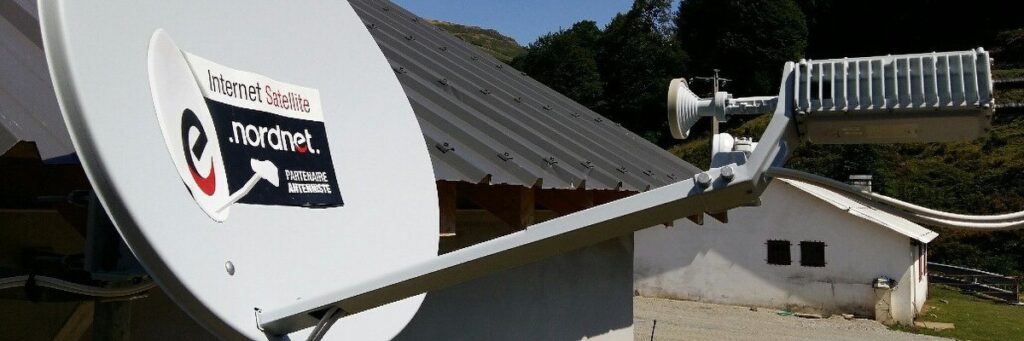
France is aiming to bring fiber to all residents by 2025, but Nordnet is betting on satellite and radio to serve the most hard-to-reach sites in the meantime. The operator says its alternative technologies can deliver 30 Mbps for less than 0 per month, tied to an Eutelsat transmitter/receiver launch and LTE-radio builds using local authority deployments.
In the same push, Nordnet frames the economics and rollout mechanics of fiber as mismatched to rural deployment timelines, then pairs that argument with specific satellite dish practices and radio network parameters for fixed sites.
2025 fiber target and the 80m RIP funding envelope
The French government announced an objective to bring fiber to all residents by 2025, and on February 21 it tied that objective to a global envelope of 280 million euros. The envelope is intended to fund RIP projects (R39seau d27Initiative Publique).
RIP projects are led by local authorities and are designed to create new local operators to commission fiber rollouts and connect customers via national backbone operators. Nordnet39s counter-position is that rural areas will not get fiber anytime soon.
Nordnet39s 30 Mbps claim: Eutelsat transmitter/receiver plus LTE antenna rollouts
Nordnet says its alternative technologies can deliver 30 Mbps speeds for under 40 euros per month, a claim associated with the launch in orbit of a new Eutelsat transmitter/receiver in January. The operator also says local authorities have been equipped with LTE antennas since the end of the previous year, supporting a radio-access path.
Christophe Outier, Nordnet39s commercial director, argues the 30 Mbps figure maps to the bandwidth needs of hotels, high-mountain refuges, and leisure centers. He also connects that bandwidth level to farmers uploading photos of their fields from drones into SaaS analytics, and cites connected machine tools for industrial sites away from residential areas and rural schools that still need modern tools.
How satellite installs are supposed to work (dish, upload speed, and planning)
Outier says the satellite high-speed connection is operational in a few minutes, because it requires installing a dish two to three meters above the ground and using a sound-pointer to aim it. The operator describes the satellite connectivity setup as using a dish for both transmission and reception.
With that dish-based setup, Nordnet39s description is that there is no need for a dedicated wired connection for upload. The dish-based arrangement is said to provide an upload speed of 6 Mbps, while Nordnet aligns its satellite connectivity solutions with unlimited-download offerings from ADSL or fiber starting in 2019, and expects download speeds to exceed 30 Mbps starting in 2022 when Eutelsat launches a new satellite.
The operator also flags a performance trade-off: satellite connectivity is described as not having the most optimal latency for quality in video conferencing calls without breakup.
Radio connectivity rollout: WiMax to WifiMax to LTE, plus partner coverage
Nordnet says 24 rural departments invested in radio connectivity via WiMax, then WifiMax and then LTE to provide a more stable connection with more predictable performance. It describes WiMax, WifiMax, and LTE as distinct generations within the same general model42an antenna on a pillar serving tens of kilometers within a frequency band.
The operator39s metrics are specific: WiMax is said to have been available since 2008 in 10 departments and provides 10 Mbps; WifiMax is said to provide 18 Mbps in 6 departments since 2015; and LTE is described as a 4G configuration focused on throughput for fixed sites, providing 30 Mbps in 8 departments since last year.
Radio access is said to require professional installation because an antenna must be placed around 10 meters high and oriented horizontally at the customer39s site. Outier also attributes Nordnet39s execution strength to a network of 1,200 partners across the territory, each within 20 kilometers of Nordnet39s customers, and says installation timelines remain comparable to fiber installation timelines in urban areas.
Read for wholesale and B2B connectivity buyers in France
If you are a wholesale roaming or enterprise connectivity buyer sourcing alternatives to fiber in French rural regions, Nordnet39s pitch is built around a practical target of 30 Mbps and an installation approach that it claims can be operational in minutes for satellite and within fiber-like timelines for radio. It also bundles other commercial elements42domain names and cybersecurity services42while framing the underlying constraint as fiber rollout economics and RIP-led commissioning structures.