
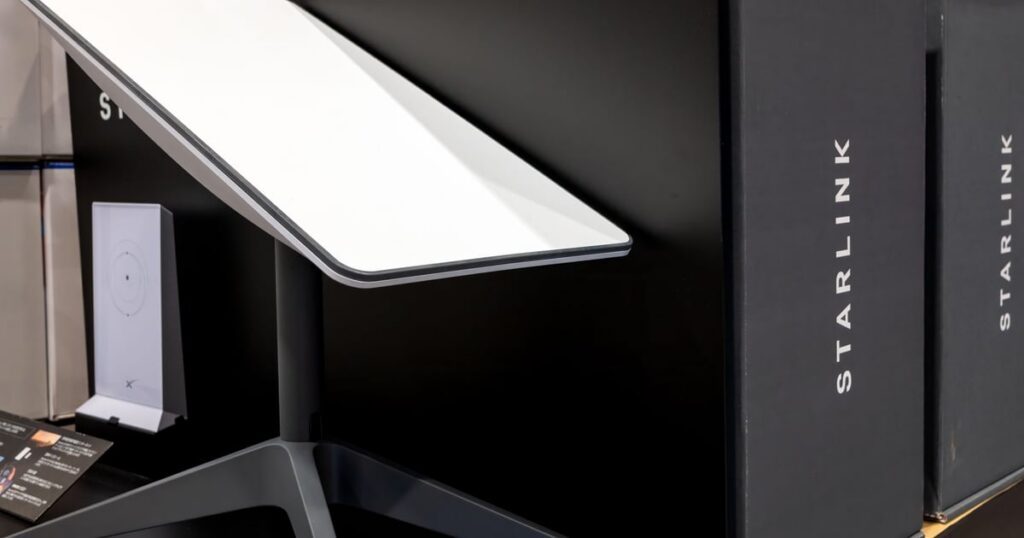
New Street Research, as reported by Light Reading, forecasts that Starlink could reach 100 million subscribers by 2034, backed by a capacity buildout tied to V2 and V3 satellites.
Light Reading also puts Starlink3 current paid subscriber base at about 10.3 million worldwide, combining residential, roaming and business customers.
Capacity roadmap: V2/V3 expansion plus possible V4
Light Reading says New Street Research expects Starlink to expand capacity to support as many as 200 million subscribers via its V2 and V3 satellite platforms, with a possibility of a future higher-capacity V4 satellite.
That capacity increase is linked to a technical base case trending toward 20,000 V3 1Tb/s satellites. New Street Research analysts (James Ratzer, David Barden, and Pierre Ferragu) estimate capacity can grow by 29x between 2025 and 2034 on that assessment.
Launch bottleneck and deployment timing risk
Light Reading reports that getting larger, heavier satellites into low-Earth orbit depends on the success of SpaceXs new Spaceship rocket.
Light Reading also reported that SpaceXs most recent Spaceship test flight took place on May 22.
Pricing, competition signals, and the FCC beam question
Light Reading says New Street Research expects pricing of equipment, installations and operating costs to drop as Starlink rolls out V2 and V3. The analysis also expects Starlink, as a low-cost provider, to be disruptive and win share.
On competitive impact, Light Reading reports New Street Research found Starlink has a minimal competitive impact on the wider broadband market at this stage, while cable operator executives have been keeping an eye on Starlinks progress and avoiding dismissal as an emerging competitor.
Light Reading further reports that New Street Research expects the FCC to eventually allow Starlink to support more than the current allowance of eight overlapping beams to meet demand in more urban and suburban areas.
Subscriber economics and marketing spending uncertainty
Light Reading reports New Street Research expects Starlink would need to beef up marketing spending to focus more on the mass market for broadband, describing marketing spend as a big unknown and a potential risk.
Light Reading also reports that New Street Research said Teslas reluctance to spend heavily on marketing has slowed sales, while early evidence indicates Starlink is running an extremely lean and scalable cost machine against more legacy telco cost structures.
In addition, Light Reading attributes a couple of operator-and-analyst observations to Starlinks near-term commercial effects, including Charter Communications CEO Chris Winfrey saying Starlink is affecting the pace at which Charter can meet subscriber penetration targets in some of its rural new-build areas, and KeyBanc Capital Markets analyst Brandon Nispel citing churn and churn-adjacent effects tied to Starlinks promotional activity and pop in LEO activity in Uniti Group (Kinetic)s copper markets.