
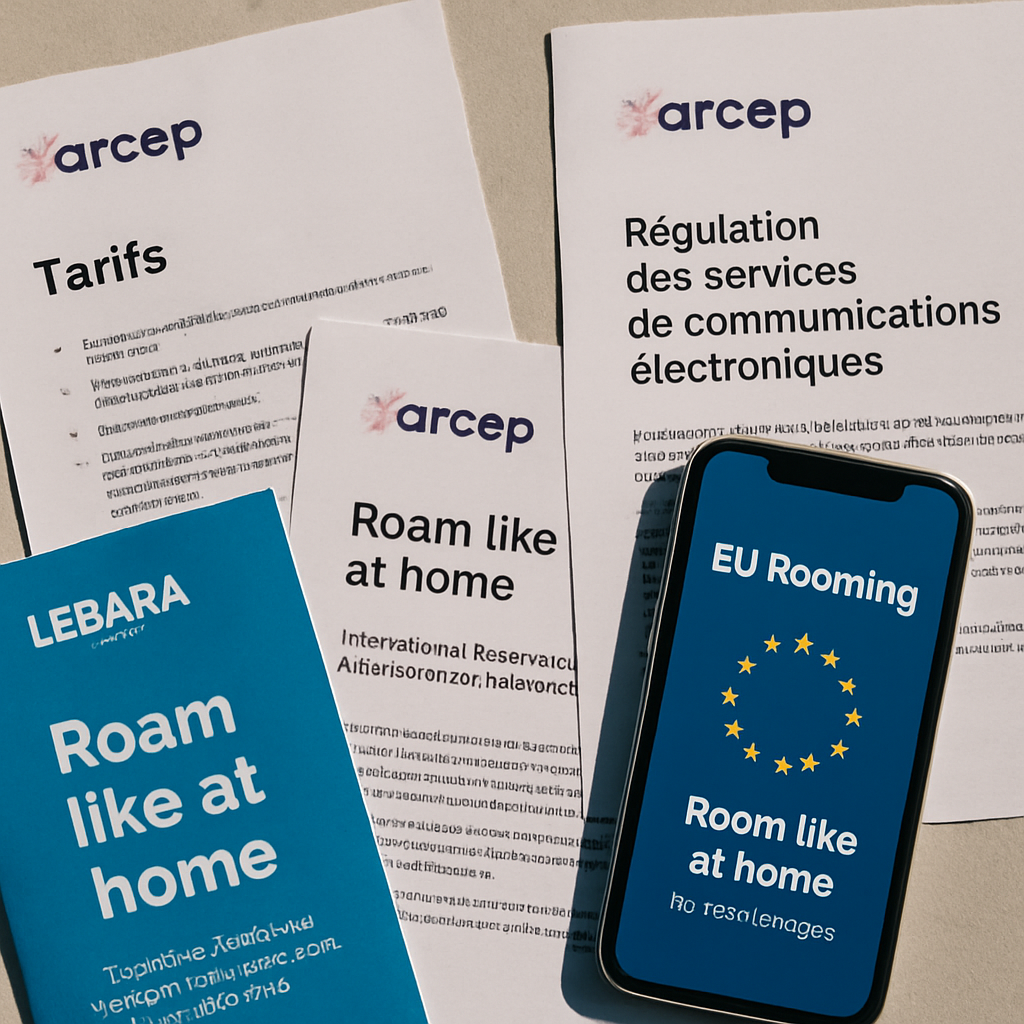
ARCEP frames EU and EEA roaming under the Roam like at home (RLAH) principle: during roaming, each call minute, each SMS, and each unit of mobile data consume resources on the visited operator7 network, and the visited operator charges usage fees to the customer7 home mobile operator. In the RLAH zone, calls, SMS, and other included services are charged at the national rate under the conditions of the customer7 operator offer.
ARCEP also outlines the exceptions: mobile operators cannot restrict calls and SMS when those volumes are included in the customer7 offer, but they may seek ARCEP authorization to offer less beneficial roaming conditions for 12 months if they demonstrate a significant deficit for RLAH roaming services; the authorization threshold requires a deficit exceeding 3% of the operators7 mobile-services margin in absolute value. ARCEP says Lebara France Ltd is the operator currently authorized to charge additional roaming fees, and that ARCEP Decision No. 2025-1935 was published on 14 October 2025.
On surcharges, ARCEP states that since 15 June 2017, roaming surcharges have been removed for European users traveling to another EU country, and that the same removal covers travel to Iceland, Liechtenstein, and Norway; from 1 January 2026, the same applies to Ukraine and Moldova. For mobile data, ARCEP says it must also be accessible in roaming in the RLAH zone under the same conditions as France, although for unlimited or particularly generous mobile internet plans and for prepaid offers, operators may set a data usage limit outside the home territory while roaming in RLAH; ARCEP further states these limits are strictly constrained and must still provide comfortable mobile internet usage, with mobile internet potentially billed with a surcharge beyond any reasonable-usage threshold set by the operator. business roaming arrangements often depend on how these fair-use limits and surcharges are applied across carriers.