
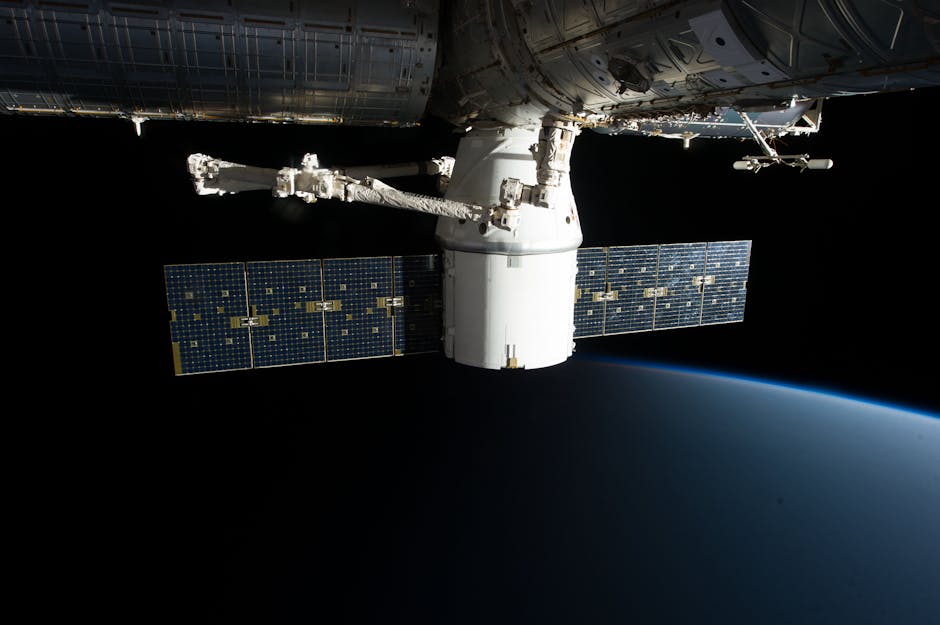
Astranis has raised $450 million in new capital, combining equity and loan commitments, as it expands small geostationary orbit (GEO) satellite production. The company frames the funding as a way to meet commercial demand for dedicated satellite systems while scaling manufacturing aligned with anticipated U.S. military procurement activity.
The financing package comes at a time when customers are looking to move away from shared GEO communications capacity and toward systems they can control more directly. Astranis says it is positioning its satellite manufacturing pipeline for that shift and for growing defense satellite needs.
$300 million Series E and $155 million credit
Astranis said the round includes a $300 million Series E round co-led by Snowpoint Ventures and Franklin Templeton. Participation also comes from Andreessen Horowitz, funds managed by BlackRock, Baillie Gifford and Fidelity Management & Research Company, plus BAM Elevate, Nimble Partners and Friends & Family Capital.
In addition, Astranis received $155 million in loan commitments from Trinity Capital. The debt is structured as a delayed-draw credit facility, meaning the company can access the funds in stages over time rather than all at once, an approach intended to better align financing with manufacturing and deployment timelines.
A source close to the deal valued Astranis at $2.8 billion.
Micro-GEO design for dedicated national capacity
Astranis builds and operates small communications satellites designed for GEO, roughly 22,000 miles above Earth. Unlike traditional multi-ton GEO spacecraft that provide broad regional coverage, these satellites weigh a few hundred kilograms and are designed to deliver dedicated capacity for specific countries, telecom operators or enterprise users.
The company’s approach positions it within a broader set of satellite vendors aiming to gain traction in the defense market by using smaller, more maneuverable spacecraft. Astranis describes the goal as enabling faster deployment and lower costs than legacy systems.
Commercial traction and operator partnerships
Astranis reports that it has five satellites currently on orbit. Service coverage includes markets such as the Philippines and Mexico, and it also supports mobility connectivity providers. The company lists telecom operator customers including Thaicom and Orbith.
Looking ahead, Astranis has announced upcoming satellite projects with Chunghwa Telecom in Taiwan and MB Group in Oman, with launches planned later this year.
Scaling manufacturing for U.S. military procurement
Astranis said the new capital will be used to accelerate production for commercial customers and to scale manufacturing to support U.S. military satellite procurements. The company expects that defense demand will increase alongside anticipated growth in the U.S. Space Force budget in fiscal year 2027.
John Gedmark, chief executive and co-founder of Astranis, said the funding is intended to ramp capacity for multiple U.S. government programs of record simultaneously, while continuing to support growth in its existing commercial business.
Astranis also describes a shift in customer demand toward dedicated GEO systems that can be controlled directly. Gedmark said this includes both commercial telecom operators and governments seeking sovereign communications capabilities.
The company frames its defense strategy around GEO as a priority orbit for national security, with a large need for new capability by Space Force. Astranis also anticipates demand across communications, navigation and space situational awareness missions, including tracking objects in orbit.
Operator and strategy teams: capacity control matters
For telecom operators evaluating GEO capacity models, Astranis’ funding and production plan are tightly linked to a recurring procurement theme in satellite communications: dedicated capacity versus shared coverage. The company’s stated customer direction—from operators and governments seeking systems they can control directly to a production ramp intended to support U.S. military programs—puts manufacturing and scheduling reliability at the center of its near-term execution.
Beyond operator-side demand, procurement teams and network strategy stakeholders may also want to track how Astranis translates financing into production throughput and how it balances commercial service commitments with expected defense orders. This funding update, published by SpaceNews, underscores the operational leverage that dedicated GEO capacity providers are seeking as satellite acquisition approaches evolve. Source: SpaceNews.