
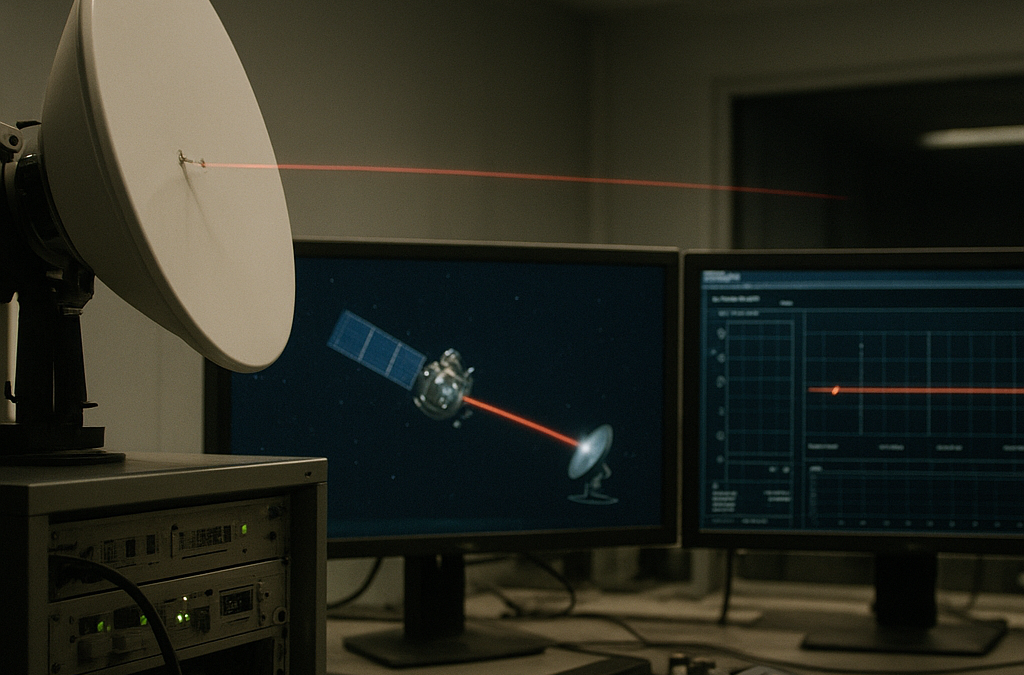
SES demonstrated a bidirectional optical communications link between ground and space using its meoSphere Pathfinder 1 mission. The company said the test validates optical data transfer technologies for its planned meoSphere satellite network (via satnews.com).
The mission linked Cailabs’ optical ground station in Rennes, France, with an SES communications payload in orbit. SES also said it transmitted high-speed video messages from Chief Executive Officer Adel Al-Saleh across the bidirectional laser link.
Test setup across ground and orbit
The space-segment payload flew aboard K2’s GRAVITAS mission on K2’s Mega-class satellite platform. The optical terminal was a spaceborne CONDOR unit manufactured by Mynaric, while SES designed, developed, and operated the mission architecture with in-house automation software handling pointing and data exchange.
Thales Alenia Space supported system assembly, integration, testing, and flight operations. That mix matters because it shows the demonstration was built around a coordinated flight stack rather than a single subsystem announcement.
What SES plans to measure next
SES plans further flight testing to extend optical link duration, evaluate data transmission rates, and benchmark pointing stability. Telemetry from the campaign will feed future Pathfinder precursor missions and help accelerate deployment of the operational meoSphere constellation.
Droam Perspective
For satellite connectivity teams, SES is putting actual flight testing behind meoSphere rather than leaving optical networking as a roadmap slide. The next test phase will turn on link duration, throughput, and pointing stability, which are the variables that will matter when the constellation moves from demonstration to service design.