
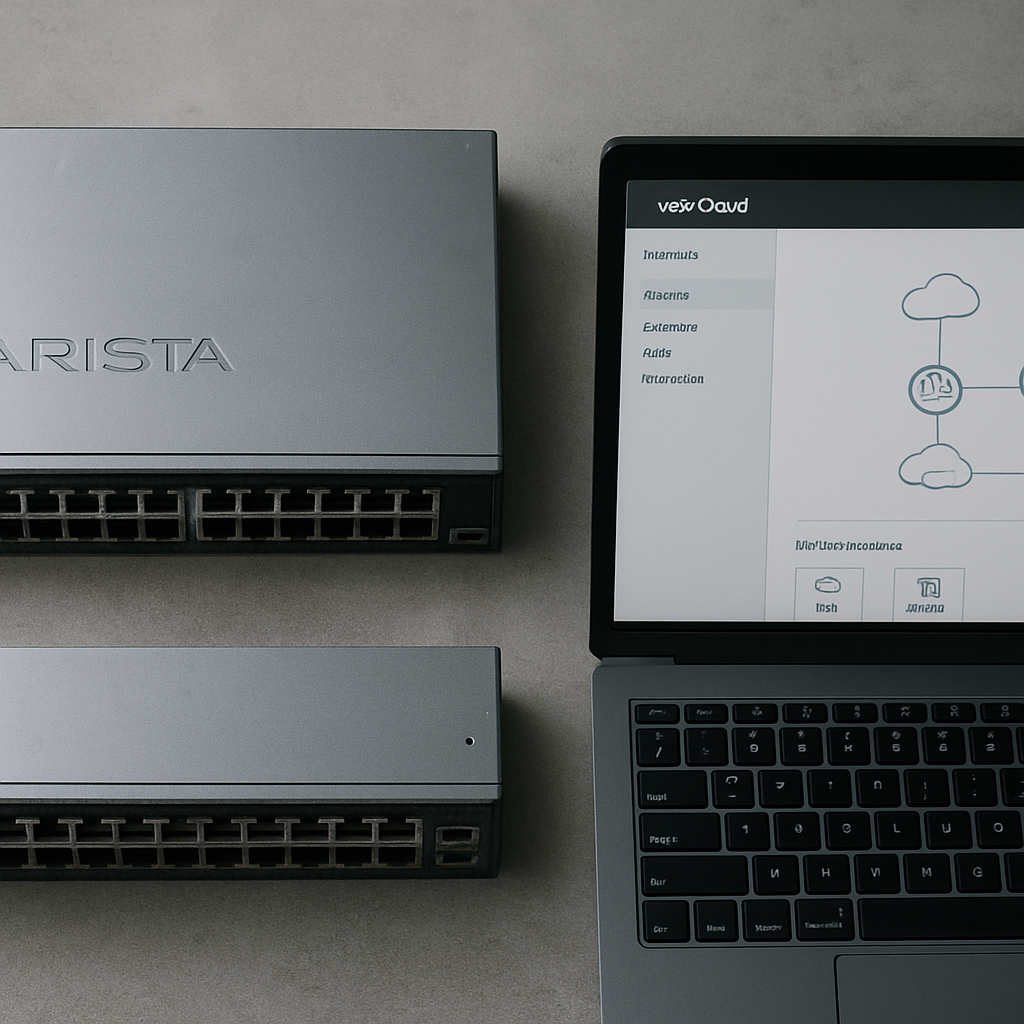
Arista acquired the VeloCloud SD-WAN software from Broadcom, bringing a new SD-WAN component into the Arista network stack that previously sat in VMware9 offerings catalog.
Analysts frame the transaction as an attempt to pair network functions with secure connectivity for traffic that originates outside the datacenter4an angle that matters as enterprises increasingly expect WAN, security, and cloud access to be designed as one.
From VeloCloud to an outside-the-datacenter connectivity layer
An SD-WAN is a gateway that lets branch offices create a virtual Internet connection over their physical links. That virtual connection is meant to route branch traffic directly to the company9 private network, which provides access to internal applications.
The article explains those applications can be hosted either in the company9 headquarters datacenter or delivered as cloud services such as SaaS or IaaS, with private access subscribed by the customer company. In that framing, expanding beyond inside the datacenter network virtualization is the mechanism Arista adds when it takes on VeloCloud9s software.
SD-WAN meets SASE: security and networking integration
Shamus McGillicuddy of Enterprise Management Associates criticized the idea that offering only an SD-WAN connection to reach a cloud is enough, saying it is somewhat obsolete compared with what the market does now.
He pointed to vendors such as HPE, Cisco, and Extreme Networks already combining security and networking, including zero-trust capabilities and secure edge access4SASE. He also said it is probable that Arista will further complement VeloCloud with another acquisition to enable a more modern SD-WAN that integrates the SASE concept.
VeloCloud9s VeloRAIN and what Broadcom was bundling away
The article says VeloCloud includes a layer called VeloRAIN (Robust AI Networking), which uses an AI engine to streamline access based on which traffic appears most important. It claims VeloRAIN can detect when an online AI user wants to upload a large amount of local data, then automatically adjust bandwidth in its favor without unduly affecting other users.
It also revisits VMware9 earlier move: VMware acquired VeloCloud in 2017 to enrich its NSX virtualized networking solution with an SD-WAN layer. The article states NSX performs the same general function as EOS, the virtualization system embedded in Arista switches4both decouple IP and MAC network addresses from the Ethernet cards on physical servers, which the article describes as key when VMs move between physical servers during traffic peaks and to enable dynamic firewall movement with applications.
Bundling platforms: VMware Cloud Foundation, Nutanix, and Arista9s positioning
Arista and Broadcom/VMware are both positioned as selling infrastructure platforms to shape the cloud rather than only basic datacenter functions. The article argues that, logically, Broadcom would benefit more from showcasing the richness of NSX to sell the VMware Cloud Foundation platform that comes with it.
At the same time, the article says NSX remains essential to VMware Cloud Foundation because it turns basic server virtualization into a cloud infrastructure platform, so cutting investment there appears paradoxical. Shamus McGillicuddy speculated that because Broadcom chose not to sell NSX as a standalone product (it is included in the VMware Cloud Foundation subscription), it likely wants to reduce network investments and dispose of accessory modules, including the SD-WAN module.
With VeloCloud, the article says Arista can sell a more complete cloud infrastructure platform together with Nutanix, which provides server and storage virtualization. It also notes this is not the first time Broadcom divested so-called accessory products from VMware9s catalog, including reselling desktop virtualization-related parts (Workspace One, Horizon) to an investment fund in February 2024, and moving Carbon Black security products into Symantec9s catalog.