
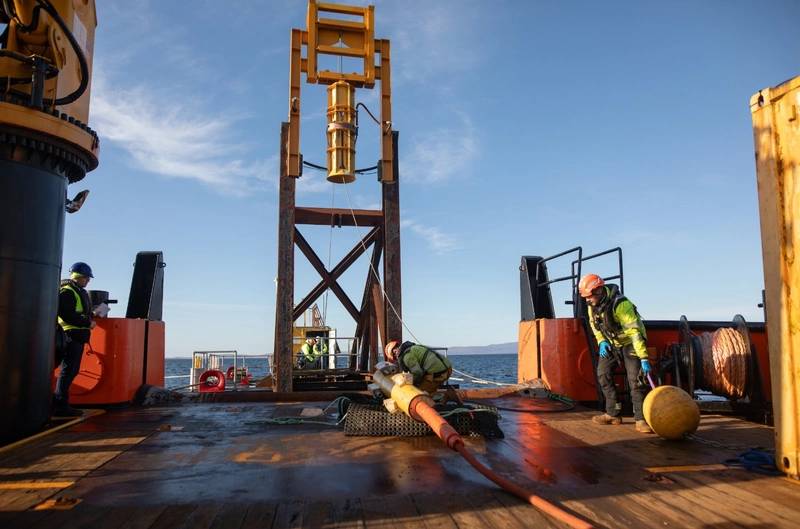
Apollo has received Bureau Veritas Approval in Principle (Level 2) for its PALM Quick Connection System (QCS), a step that moves the cable connection technology toward technical qualification and Type Approval for floating offshore wind.
The certification comes after a 12-month full-scale front-end engineering and design (FEED) study funded by the Offshore Wind Growth Partnership and Wave Energy Scotland, with the assessment confirming PALM QCS was independently evaluated against industry standards.
FEED certification that clears industry-standard assessment
Apollo says the Bureau Veritas assessment followed its 12-month full-scale FEED work, and that the certification confirms PALM QCS was independently assessed against industry standards. The company also frames the approval as a gating milestone that allows the system to advance toward technical qualification and Type Approval.
PALM QCS targets faster, vessel-light reconnects for dynamic cables
Apollo positions PALM QCS as a system to simplify the connection and disconnection of dynamic cables from floating offshore wind turbines, designed to avoid specialist vessels, divers, and personnel transfer. In field trials, Apollo says the system completed 50 successful connection and disconnection operations and can reconnect dynamic cables in 5.5 hours, compared with marine operations that can take several days.
Safety and downtime reduction claims hinge on eliminating personnel transfer
Apollo says the technology is intended to reduce offshore downtime, lower weather-related operational risks, and improve safety. Its safety argument centers on eliminating the need for personnel transfer during cable operations, removing a key dependency on crew movement during dynamic cable work.
2027 subsea electrical trials to continue qualification track
Apollo says the PALM QCS technology was originally developed through a Wave Energy Scotland program. It plans additional subsea electrical trials in 2027 as part of a European Union Horizon project led by the European Marine Energy Centre.
Nigel Robinson, Marine Energies Director at Apollo, said the milestone is a step toward commercial deployment and helps demonstrate its bankability. He also said Bureau Veritas applied in-depth technical scrutiny to Apollo’s design and trials work, and that the team is looking forward to the next level of qualification toward a first full-scale deployment.
Stéphanie GASC, BV M&O Design Assessment S.U.R.F Engineer, said her team conducted a comprehensive review of Apollo’s PALM QCS FEED design and initial offshore trial documentation, and that constructive feedback supported compliance with subsea industry standards.