
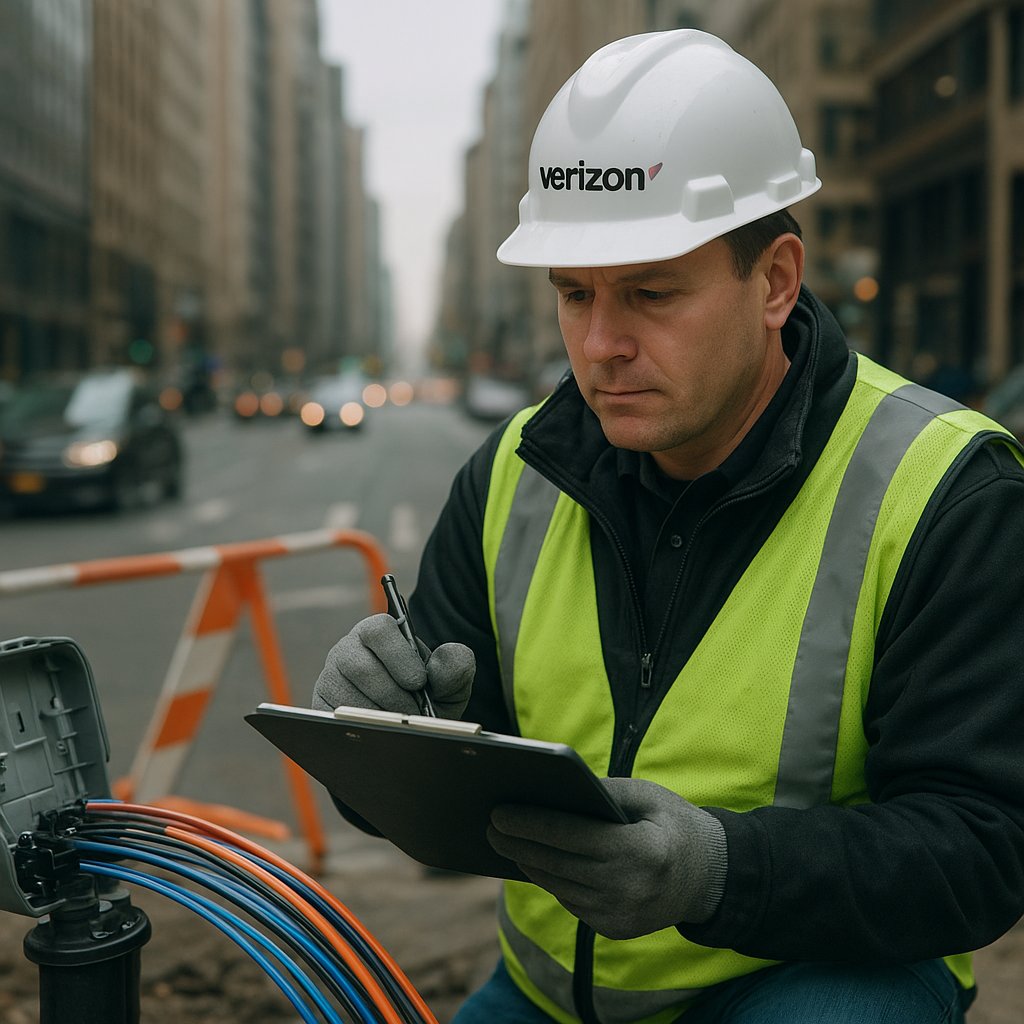
Verizon is accelerating its network build activity by over 20% year-on-year, and SVP and Chief Network Officer Srini Kalapala frames AI and edge computing as the foundation for what comes after 5G.
In remarks shared through an RCR Wireless conversation with Jeff Mucci at Connect (X), Kalapala also ties the build ramp to fiber expansion, and describes internal AI use to reduce friction in construction workflows.
Build acceleration and fiber footprint growth
Kalapala said execution on build activity is up roughly 20% over the last year, with new builds tracking above 20% year-on-year. Verizon is also pushing past 30 million fiber premises passed, a footprint enabled by the Frontier acquisition.
On the fiber side, Verizon is targeting 2 million premises passed this year, and Kalapala points to operational experience that Verizon9s fiber business dates back to 2003.
Virtualization and Mobile Edge Computing in the architecture
Verizon has 40,000 sites running on virtualized distributed units (vDUs), and Kalapala described a wider virtualization posture that includes a fully virtualized back office, packet core, and IMS infrastructure.
The interview also places Mobile Edge Computing at the center of the performance argument: Verizon has MEC infrastructure deployed across 22 U.S. sites, putting cloud compute right next to the packet core to avoid workloads having to round-trip to a distant central data center.
Kalapala acknowledged that some expected 5G edge use cases have taken their time arriving, including autonomous driving and drone applications.
Network AI, dynamic provisioning, and APIs
Kalapala9s AI thesis runs through network behavior rather than another static service tier. His vision is to move away from static service tiers toward dynamic provisioning, where the network adapts in real time to what a user is doing.
He positions network APIs as the mechanism: machines would request specific network characteristics3such as low latency, high downlink, or more uplink3for the duration needed, without a human in the loop. In the interview framing, this shift also changes how network capabilities get packaged and sold, with AI and the networks evolving together.
Using AI to reduce construction workflow friction
When Kalapala talks about efficiency, he explicitly rejects the idea that it is about pushing costs onto build partners. Instead, he says it is about removing friction between Verizon and the entities that build for it.
Verizon teams produce architecture diagrams that are converted into construction diagrams handed off to build partners. The interview describes a historically high fallout rate between those diagram types, where bad inputs lead to rework, wasted material, and application errors3problems Kalapala says Verizon is now trying to cut by using AI tools to translate architecture diagrams into construction diagrams more accurately.
He also said it remains to be seen whether this AI-driven handoff will fully translate into a healthier commercial relationship with the build community.
Satellite as complementary coverage, plus security in the AI era
On satellite, Kalapala called direct-to-device satellite the most exciting thing out there, but also made a pointed aside that industry valuations are running ahead of what has actually been delivered on the direct-to-device side. His position is that satellite is complementary to terrestrial networks, especially where fiber, cable, or fixed wireless access solutions are difficult to deploy, and he said Verizon9s plan is to lean on partnerships rather than build its own satellite capability.
Finally, Kalapala framed security in the quantum and AI era as a two-sided problem: he said AI can help generate new threats in minutes, forcing defenders to close gaps and ship patches at the same speed. He also said Verizon thinks it can package and sell quantum-safe networks and secure AI-at-the-edge offerings to enterprise customers, and suggested telecoms have built trust around delivering secure connectivity; he described whether that becomes meaningful enterprise revenue as a longer conversation, with urgency on defense and upside in shaping a new market.