
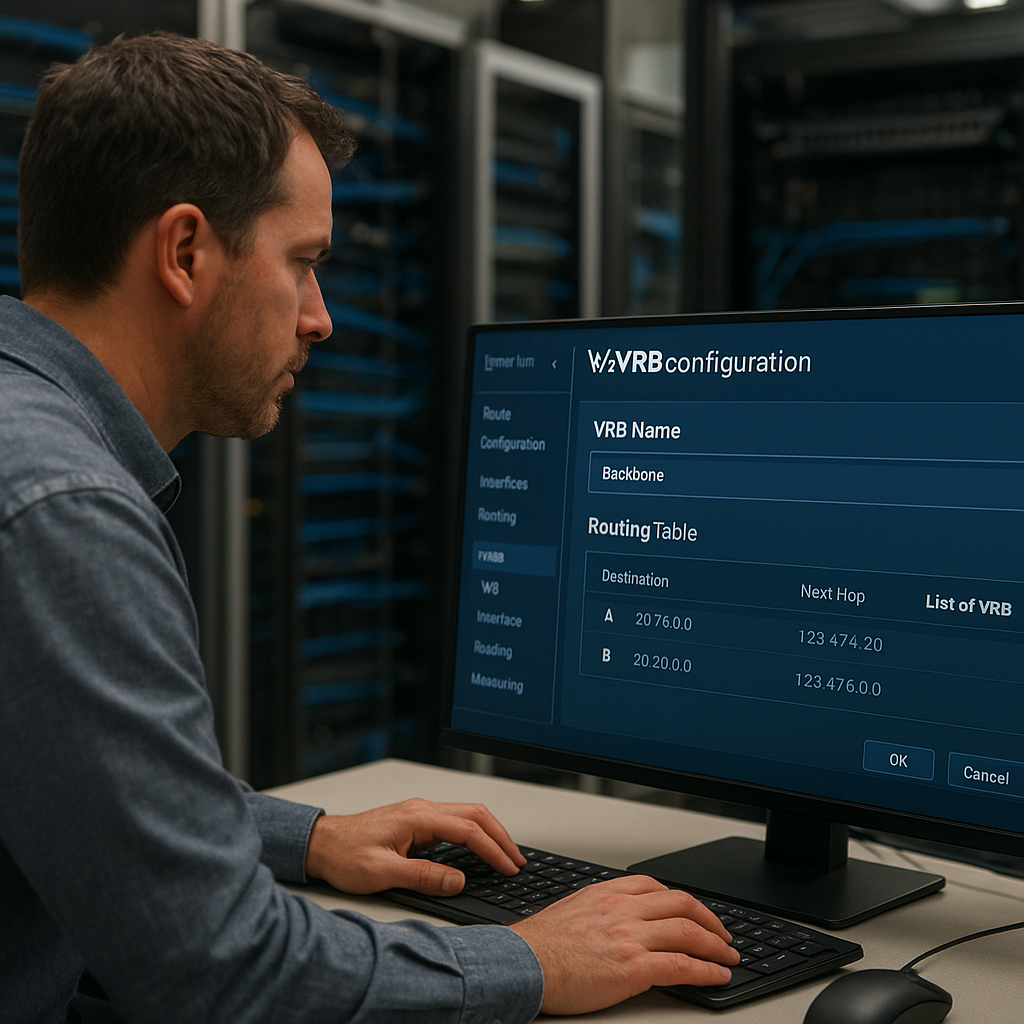
Flex is pitching a private-label telecom operator model that it says gives partners control over the configuration and operation of the operator infrastructure, rather than limiting them to reselling a third party’s services. The company’s architecture centers on virtualized routing instances called VRB (Virtual Routing Backbone), designed to let partners deploy advanced services inside the network core.network redundancy solutions
At Proxitel, a regional operator and a Flex partner, Florian Bissièere describes Flex’s platform as going far in parameterization and configuration, and says it makes Proxitel’s technical team more autonomous for faster customer responsiveness.
From classic white-label reselling to partner-controlled infrastructure
Flex offers a telecom operator service in a private-label (white-label) model. In contrast with classic white-label operator setups—where partners resell services operated by a third party—Flex gives partners control over the configuration and operation of its operator infrastructure.
Flex positions the approach as intermediate between branding-only white-label and operating one’s own network core and collection gateways. Emmanuel Tournade is described as explaining the strategy, and Proxitel’s Florian Bissièere frames Flex’s platform as the step between those two extremes.
VRB virtual routing: advanced services inside the core
Flex’s network architecture core is based on virtualized routing instances called VRB (Virtual Routing Backbone). VRB allows partners to deploy advanced services directly inside the network core.
Flex also describes an example at Proxitel: virtualized private networks created directly in the aggregation router, plus virtual machines to deploy Stormshield security services without installing physical equipment at the customer site.
Performance claims: millions of packets per second and hundreds of 10G links
Emmanuel Tournade says Flex increased the performance of its virtualized network core by using Mellanox network cards that are now owned by Nvidia. The infrastructure is described as capable of processing several million packets per second, and supporting hundreds of simultaneous 10 gigabit links while remaining controllable by partners.
For Flex’s commercial push, the company says it targets telecom integrators, regional operators, and MSPs, and differentiates itself by aiming to avoid partners being treated as merely “requesters” by the provider’s technical teams.
Growth and partner targets in France
Flex says it works with more than 140 active partners in France, and lists DFM, Factoria, and Heliaq among them. Emmanuel Tournade cites Encom Conseil, Sybord, and Fastwan among recent recruits.
Tournade sets a long-term goal of reaching 200 partners, while saying he does not want to go beyond 200 to avoid over-distribution. He also estimates Flex could quickly reach 20 million euros in revenue, and says this threshold corresponds to the critical size relative to infrastructure operators.