
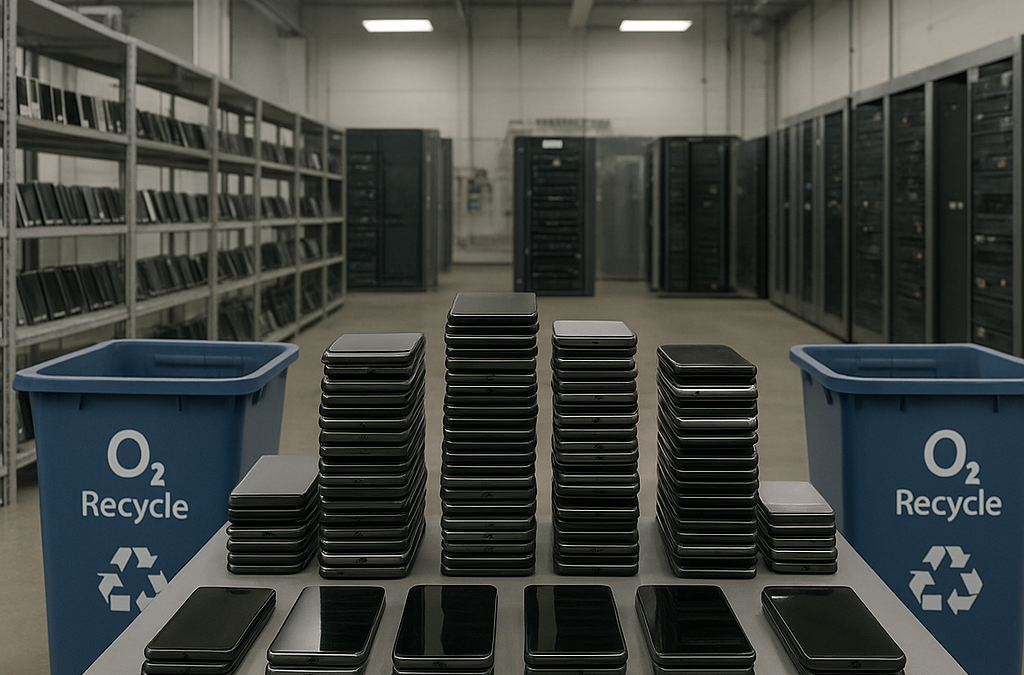
Virgin Media O2 unveiled a Green Transition Plan targeting net zero across its full value chain by 2040. The Telecom Industry move combines device reuse, recycling, and emissions cuts across the operator’s network and supply chain.
The company says smartphones, tablets, and consoles can be given a second life and sold as like new products. It also says its circular economy work reduces demand for critical materials, supports business resilience, and increases customer choice.
Device reuse and recycling targets
Virgin Media O2 aims to double the number of people buying refurbished devices from the company by 2030. It also aims to double the number of people recycling unwanted devices through O2 Recycle by 2030.
Those targets sit inside a broader push to keep more devices in circulation for longer rather than treat them as one-way hardware purchases.
Emissions cuts across the value chain
Virgin Media O2 says networks, data centres, and devices are responsible for 1.7% of global emissions. The company will reduce Scope 1 and 2 emissions by 90% by 2030 and Scope 3 emissions by 50% by 2030.
Virgin Media O2 says it has already reduced Scope 1 and 2 emissions by 63% against its 2020 baseline. The 2040 target extends that trajectory to full value-chain net zero.
Nigel Topping backs the delivery case
Nigel Topping, co-founder of Ambition Loop and a UN Climate Champion for COP26, said what matters is not just ambition but clarity on how targets will be delivered in practice through transparent, accountable, and measurable action across the whole value chain.
He added that Virgin Media O2’s plan helps build confidence among investors, policymakers, and the public that the transition is both achievable and underway.
Read for device-refurbishment and sustainability teams
The commercial signal is straightforward: Virgin Media O2 is tying refurbished-device growth to an emissions plan, not treating them as separate tracks. For buyers and partners in the device lifecycle chain, the concrete numbers are the 2030 doubling targets and the 2040 net zero deadline.