
Maravedis says MDU connectivity is consolidating as managed Wi‑Fi penetration rises and bulk internet expands. The analyst firm says the shift is part of a three-part series on how economics, capital, and operator strategy are accelerating market consolidation in MDU connectivity.
Managed Wi‑Fi and bulk internet are the growth markers
Maravedis counts roughly 26.9 million U.S. multi-family rental units. Managed Wi‑Fi reached 6 percent of those units in 2025, and Maravedis projects that share will climb to 12 to 15 percent by 2031.
Bulk internet is already a larger slice of the market. It accounts for nearly 17 percent of the rental stock today, and Maravedis expects it to rise to 33 percent by 2031.
Scale is the advantage Maravedis says is winning
The article says scale is becoming the defining advantage in MDU connectivity. It says the market is already in a consolidation wave that will leave a smaller group of larger players over the next decade.
That argument is built on capital intensity, customer concentration, regulatory complexity, and a constant technology refresh cycle. Maravedis also points to growing strategic interest from the largest operators in the U.S. as a factor that rewards scale over fragmentation.
Gigapower shows the open-access model
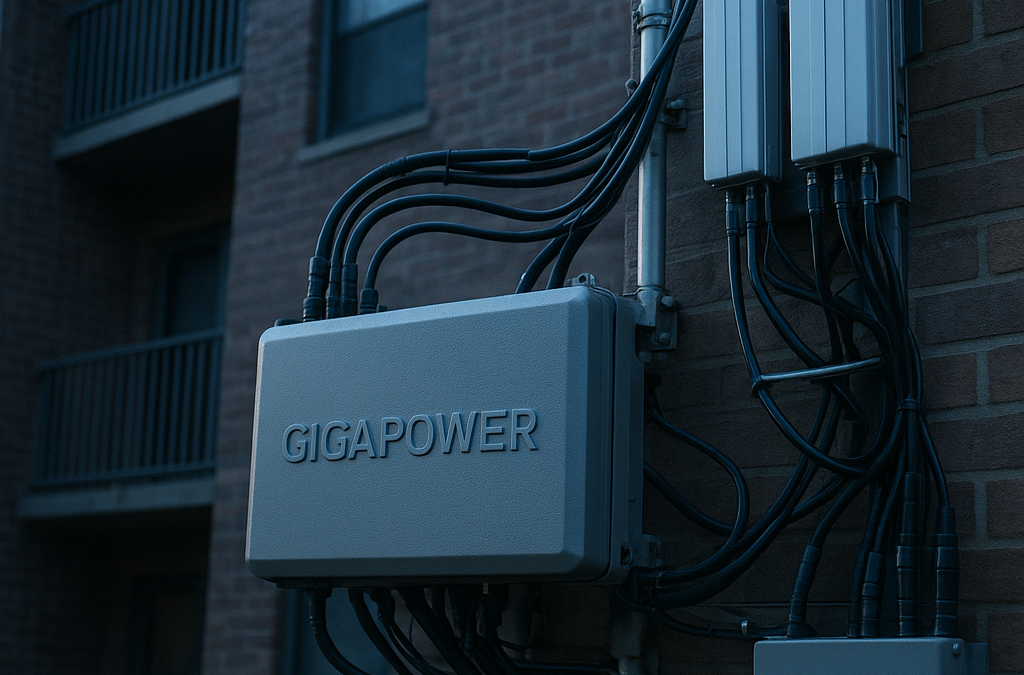
AT&T and BlackRock’s Gigapower joint venture uses an open-access structure that separates infrastructure ownership from the customer relationship. Maravedis cites that model as one of the ways larger operators move into multi-family connectivity, alongside acquisitions and dedicated connected-communities units.
Read for MDU connectivity buyers and operators
For operators, the numbers point to a market where managed Wi‑Fi and bulk internet are still far from saturation, but the economics increasingly favor scale. For buyers and planners, the open-access Gigapower example shows one way larger players are structuring entry into multi-family connectivity without owning the customer relationship outright.