
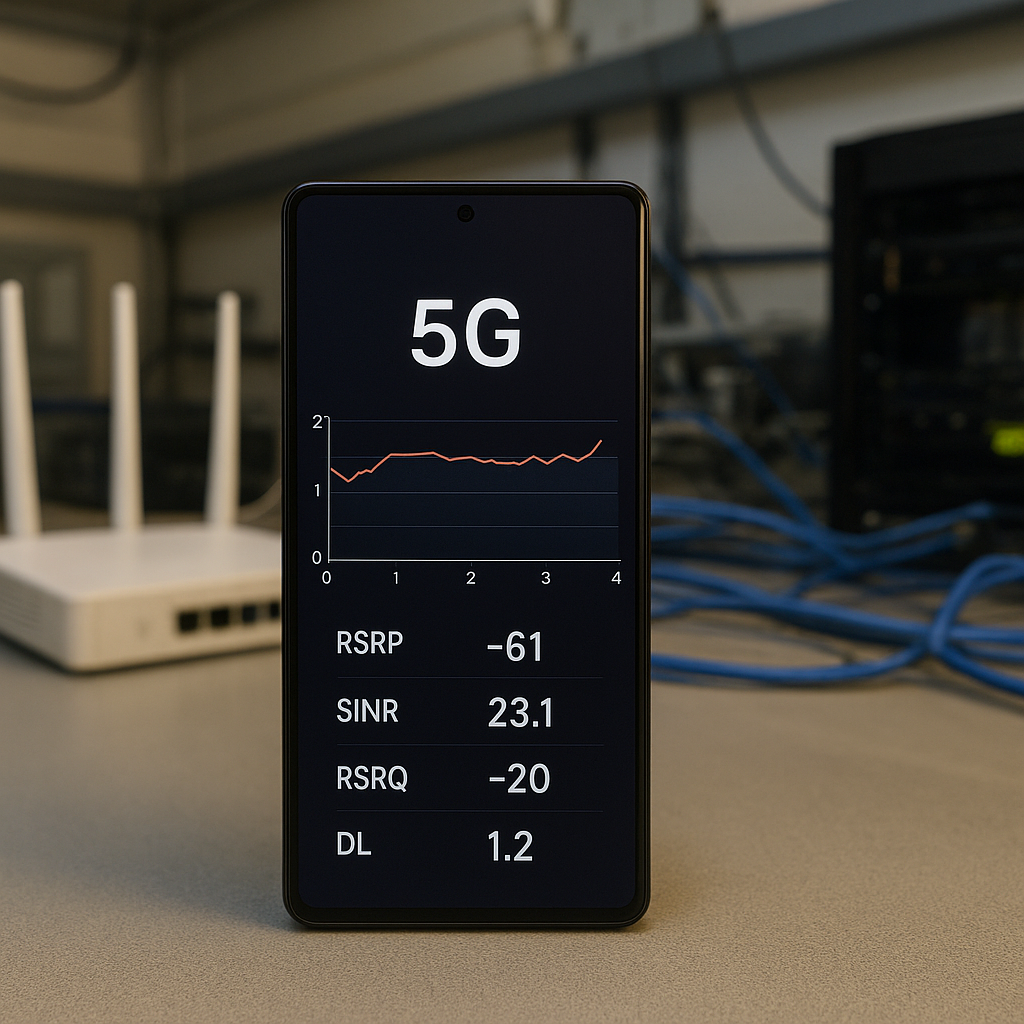
Optus and Ericsson say they achieved a carrier aggregation world first by combining multiple mid-band frequencies on Optus7 commercial 5G standalone (SA) network.
The test used four-component carrier (4CC) aggregation across 900 MHz, 2.1 GHz, 2.3 GHz, and 3.5 GHz downlink spectrum to record peak throughput of 3.4 Gbps on 220 MHz of bandwidth.
How Optus assembled the 4CC downlink on live 5G SA
Optus used four-component carrier (4CC) aggregation across 900 MHz, 2.1 GHz, 2.3 GHz, and 3.5 GHz downlink spectrum. It said the peak downlink throughput reached 3.4 Gbps using 220 MHz of bandwidth.
The speeds were achieved on Optus7 live 5G SA network at its Sydney campus, using commercial devices, including the Samsung Galaxy S26 Ultra.
2CC uplink result and the FDD/TDD mix
Optus and Ericsson also used carrier aggregation to reach 200 Mbps on the uplink. They said the uplink result was achieved using two-component carrier (2CC) aggregation that combined 900 MHz and 2.1 GHz FDD with 2.3 GHz and 3.5 GHz TDD.
What7s claimed as novel: 180 MHz across 2.3 GHz and 3.5 GHz
Optus and Ericsson said they became the first to aggregate 180 MHz across 2.3 GHz and 3.5 GHz mid-band spectrum.
They also placed the exercise in a wider carrier-aggregation context, with the industry recording multiple milestones in recent years.
Rollout themes: mobile hotspots and fixed-wireless access
Optus said rolling out the technology will unlock better network performance in high-traffic areas such as transport hubs, central business districts (CBDs), and events.
Optus added that the 180 MHz of combined mid-band spectrum will enhance fixed wireless access (FWA) performance, with the technology already supported by certain devices, including the Samsung Galaxy S26.