
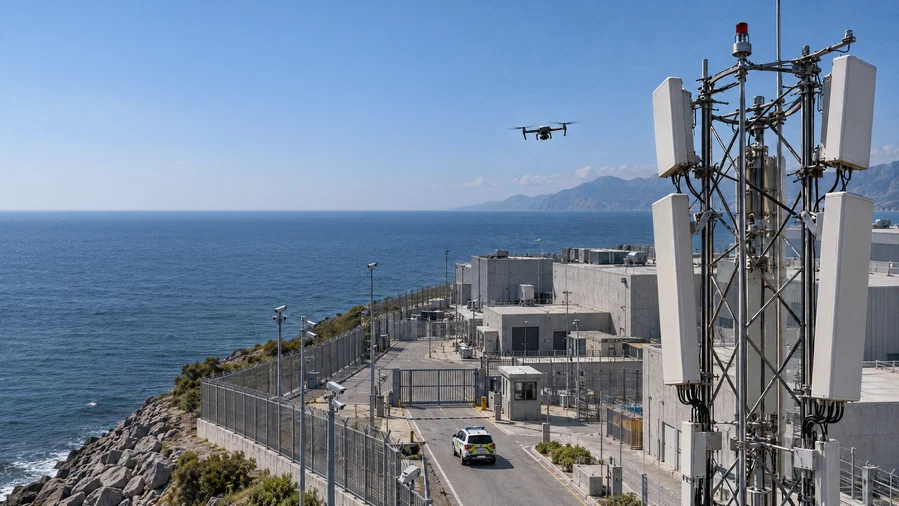
Ericsson introduced the Ericsson ISAC System, adding sensing capabilities to mobile networks and setting up small-scale sensing-only commercial pilots with selected customers in 2027, followed by broader deployments from 2028. The company says the system is designed to help defense, public safety, and critical infrastructure operators detect and track moving objects, including drones that are not connected to the network (via totaltele.com).
Ericsson says the integrated communications capability will come later as the platform evolves toward 6G. In validated tests, the company said the system detected and tracked microdrones at kilometer-scale distances with precise 3D positioning.
| Fact | Value |
|---|---|
| Pilot start | 2027 |
| Broader deployment | 2028 |
| Test range | Kilometer-scale distances |
Network sensing moves from the lab to field tests
Ericsson said the system uses sensing-capable 5G radios, edge computing, AI, and signal processing to detect objects that are not connected to the network and maintain tracks across the coverage area. It also uses existing 5G infrastructure such as towers, backhaul, and spectrum across cities, transport corridors, and strategic locations, which is the main reason the company is framing ISAC as a network function rather than a stand-alone sensor stack.
Trials with AT&T in Arlington, Texas used sensing dashboards to display drone activity and detected, located, and tracked multiple drones. A separate demonstration with Erillisverkot in Helsinki showed multiple 5G sites detecting and tracking drones.
In Poland, Ericsson, Asseco, and Play demonstrated technology that could support detection and positioning of low-flying drones with higher accuracy. Those tests are the clearest evidence in the claim set that Ericsson is moving the concept beyond a slide deck and into multi-site deployments.
What it means for U.S. buyers
For U.S. defense, public safety, and critical infrastructure buyers, the immediate decision is whether drone detection belongs in the cellular network or in separate sensor systems. Ericsson’s AT&T trial in Arlington shows the approach can be tested on existing wireless infrastructure, while the 2027 pilot timeline means procurement teams are still looking at a phased commercial path rather than an immediately finished product.
Droam Perspective
For wireless carriers and mission-critical network teams, the important part is not the drone narrative but the positioning of sensing as a network capability. Ericsson is also signaling that the first commercial step is sensing-only, with integrated communications deferred until later in the 6G transition, which keeps the near-term product narrower than the broader ISAC framing suggests.