
Cellular IoT connects physical devices to the internet using mobile networks, and the playbook for choosing LTE-M, NB-IoT, and 5G is largely about what you need to optimize: coverage, bandwidth, device power draw, or mobility. One cited Ericsson forecast expects that by 2023, more than 3.5 billion of 20 billion IoT devices will run over cellular networks.
This is also why the technology is framed as the default for large-scale deployments: no new infrastructure per site, global reach via cell towers, and a SIM-based authentication path that ties a device to a legitimate subscriber.
What 0ellular IoT means and why its treated as the default WAN option
The term cellular IoT refers to mobile-network connectivity that links devices to the internet, using cellular infrastructure as a wide area network. The article positions cellular as the most popular connectivity type for IoT, citing factors such as excellent coverage, simplified global deployment, and operation across indoor and outdoor environments.
It also describes cellular IoT as a connectivity approach that can be used
day one after deployment, and as a more secure option than other shared networks because SIMs are used to authenticate devices and associate them with a subscriber identity.
Where cellular IoT is used: from assets and logistics to emergency services
The article lists a wide application set for cellular IoT, including autonomous cars, smart parking, autonomous agricultural equipment, and consumer wearables such as smartwatches. For B2B device deployments, it says an IoT device
probably relies on cellular connectivity when it shows up in enterprise use.
In operational terms, it calls cellular IoT a good fit for logistics, manufacturing, asset tracking, supply-chain management, emergency services, healthcare, and security
use cases that typically require reach beyond Wi-Fis effective distance from an access point.
How cellular IoT connectivity works: SIM cards, modems, and spectrum bands
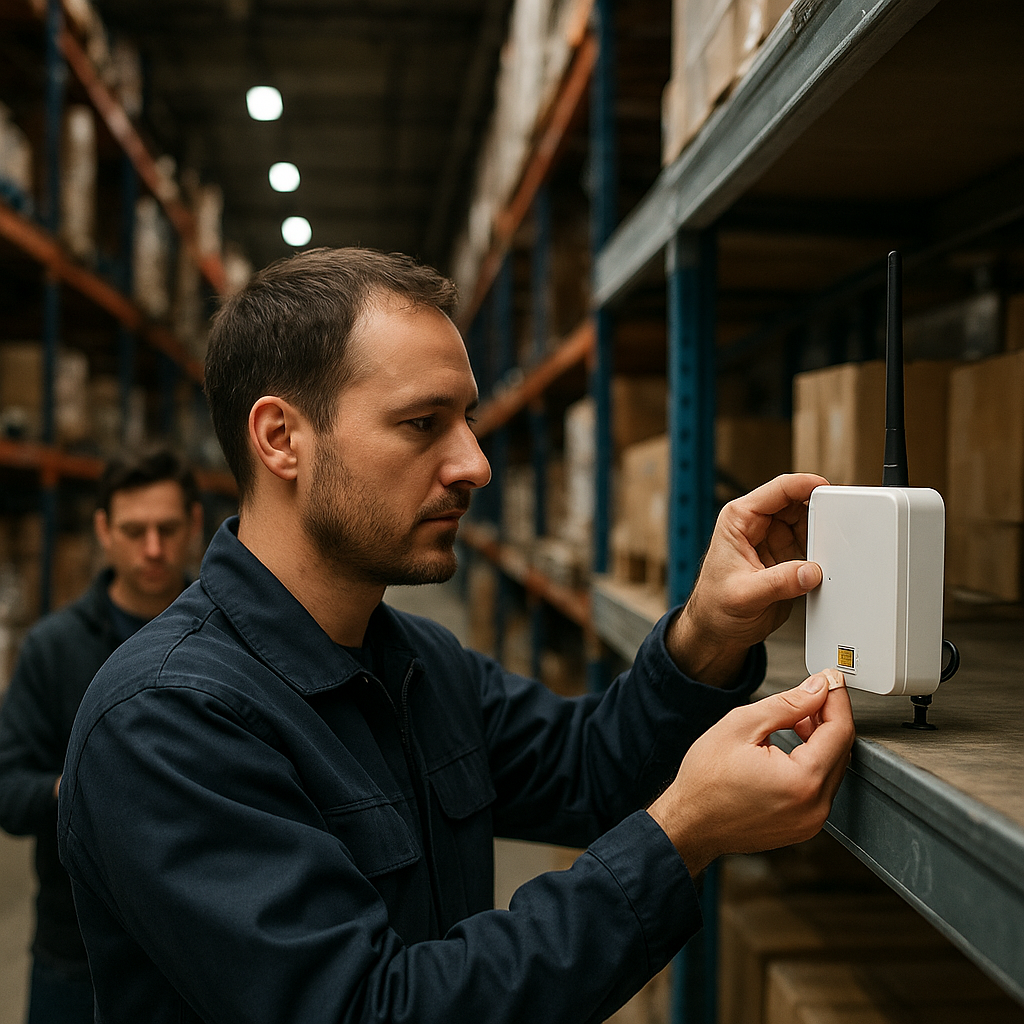
The article breaks cellular connectivity into building blocks: IoT SIM cards, modems, frequency bands, and mobile network classifications spanning 2G through 5G, including NB-IoT and LoRaWAN. It states that IoT devices need an SIM card to connect to a cellular network.
It also adds a deployment detail: the device should use SIM management software that helps keep authentication aligned as you scale across networks and geographies. The modem selection is described as affecting which frequency bands the device can access, and the article defines a frequency band as an RF range from 30 Hz to 300 GHz.
For conventional cellular spectrum, it states that cellular uses a portion between 800 MHz and 5 GHz for 2G/3G/4G, while 5G can use bands up to 35 GHz.
LTE-M vs NB-IoT vs 5G: the power, mobility, and bandwidth trade-offs
The article groups the relevant cellular options under LTE-M and NB-IoT, alongside broader mobile generations and LPWAN approaches, as technologies used to transmit and receive data. It frames battery life and energy consumption as the biggest limitations of cellular connectivity, and then points to mechanisms that reduce power draw for specific network types.
For NB-IoT, it says the technology leverages gaps in the radio spectrum to provide more efficient connectivity and avoid interference. It introduces two energy-saving features
Power Saving Mode (PSM), which puts the device into standby when not in use, and Discontinuous Reception (DRX), which extends the time of active listening
so that NB-IoT devices can have years of battery life.
For LTE-M, the article says it allows IoT devices to connect to 4G networks and provides more bandwidth and mobility than NB-IoT, including voice access via VoLTE. It also states that LTE-M can come with higher idle energy consumption and more expensive modems, while still extending battery life by using PSM and DRX. It further presents LTE-M as using less energy than NB-IoT because higher bandwidth enables faster data downloads.
Finally, it positions 5G as having potential for IoT, particularly for data-intensive mobile applications where speed is crucial, such as autonomous vehicles and emergency services. It states that 5G can offer almost real-time data transmission, maintain stable connections at very high speeds, and support cellular connectivity with low energy consumption.