
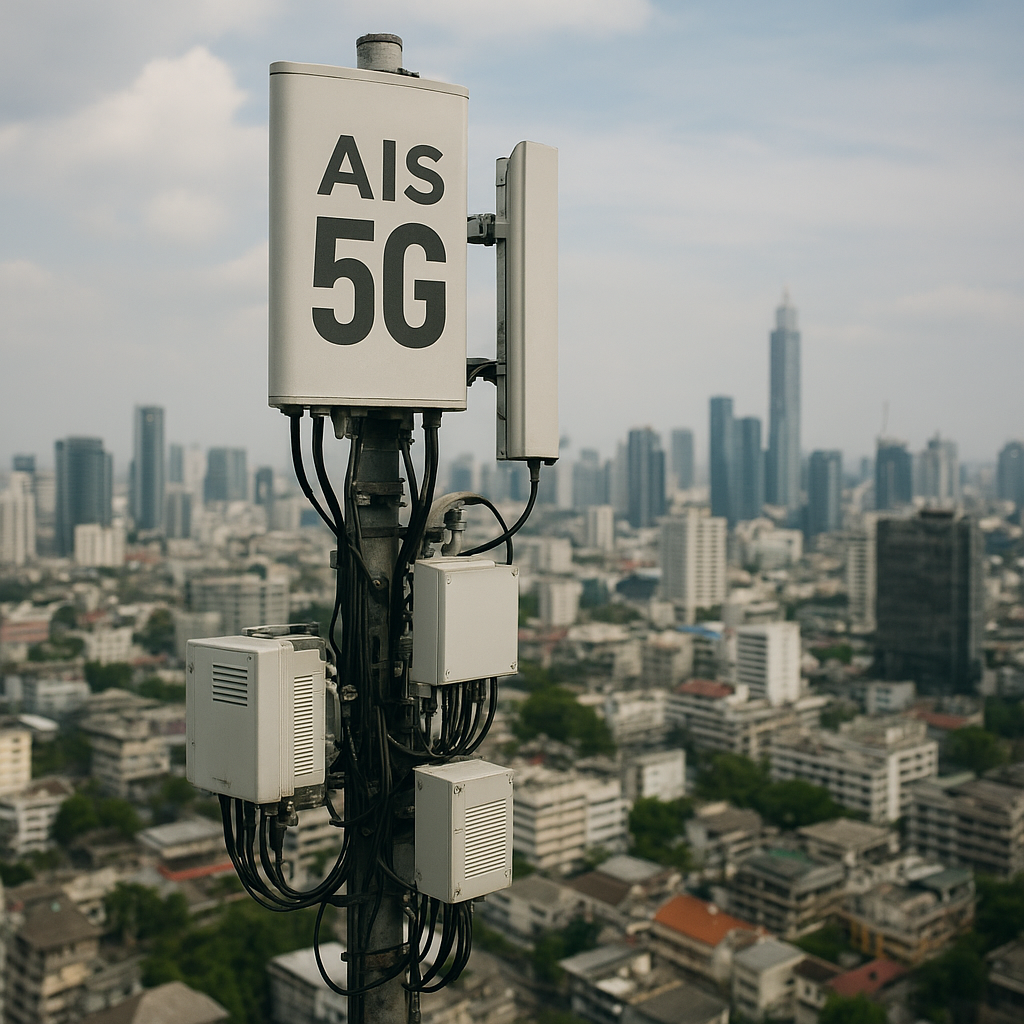
Thai operator AIS has launched 5G-Advanced, leveraging 3GPP Release 18 alongside carrier aggregation to target faster downlink and uplink performance.
AIS commercially launched the new 5G-A network on Wednesday, deploying different carrier-aggregation combinations for downlink and uplink and rolling out the capability in phases across Bangkok and other Thai regions.
5G-A on 3GPP Release 18 and carrier aggregation
AISs 5G-A is built on the 3GPP Release 18 standard and uses carrier aggregation for both directions. For downlink, AIS says it implements 3CC carrier aggregation combining the 700 MHz, 2100 MHz, and 2600 MHz bands, which it claims can boost downlink 5G speeds by up to 1.5 times.
For uplink, AIS says it uses 2CC carrier aggregation combining the 700 MHz and 2600 MHz bands, claiming an uplink boost of up to 2 times.
Autonomous networking and AI for traffic management
AIS is integrating AI into network traffic management through an autonomous network model, which it says will analyze, adapt, and respond to usage conditions in real time. This kind of automation is increasingly paired with 5G load balancing approaches to smooth performance across changing demand.
Geographic rollout: where 3CC and 2CC are available
AIS says the 3CC implementation of 5G-A is available only in Sathon and Bang Rak. It plans to expand 3CC coverage to key areas across Bangkok and its metro region before the end of this year.
In the meantime, AIS offers a 2CC downlink version in Bangkok, the metro region, and major city centres across Thailand. AIS says 2CC uplink availability covers major city areas across Thailands northeastern region, Bangkok, and the metro region, with nationwide major city-centre availability expected by 2026.
Wasit Wattanasap on efficiency, enterprise use, and 6G readiness
Wasit Wattanasap, AIS head of nationwide operations and support business unit, said the upgrade is intended to support greater overall network efficiency, along with faster downloads and uploads.
In comments tied to the launch, Wattanasap also said it targets next-gen digital lifestyles and enterprise use cases, and that it lays the foundation for a future transition toward 6G.
In a statement, he added that network development is no longer only about increasing speed, signal coverage, or the number of base stations, but about building new capabilities and delivering the best digital experience for customers in every use case.