
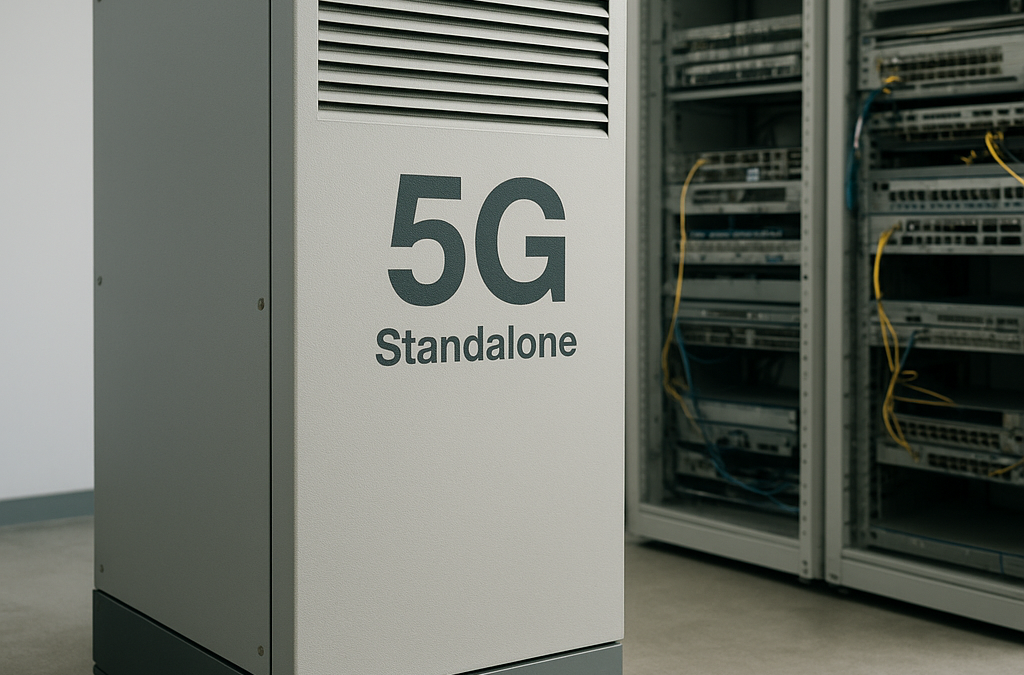
5G Standalone can cut latency by 23% compared with 5G non-standalone networks, and IFS’ Markus Persson says telcos need to move digital infrastructure to an edge-native, AI-infused model.
That shift is not just about cleaner architecture. In Persson’s view, 5G Standalone can support low-latency, reliable services and open new industrial markets for telecom providers.
Network slicing and control loops
5G Standalone unlocks network slicing and low-latency control loops. It is a fully independent network architecture, unlike 5G non-standalone, which is closer to 4G and 3G, and it uses cloud-native switching and routing infrastructure that runs on hyperscale hardware.
Persson says that combination lets telcos tailor network performance in almost any location. The same model also supports low-latency control loops without forcing operators to keep the NSA-era architecture in place.
Major events and faster deployment
5G Standalone is said to work well at major events such as sporting events or concerts, where operators traditionally begin putting network infrastructure in place at least one year in advance. A hyperscale module can be placed at the edge of an event, allowing operators to install cloud-native switching, routing capabilities, and digital infrastructure within hours.
That makes the event case less about temporary coverage and more about how quickly telcos can spin up edge infrastructure when latency and reliability matter.
Read for event networks and industrial bids
The event-deployment angle is the clearest commercial read here: operators that can bring up cloud-native infrastructure in hours instead of planning a year ahead have a different operating model to sell. The same applies to industrial buyers that want low-latency service guarantees and network slicing rather than a conventional mobile overlay.