
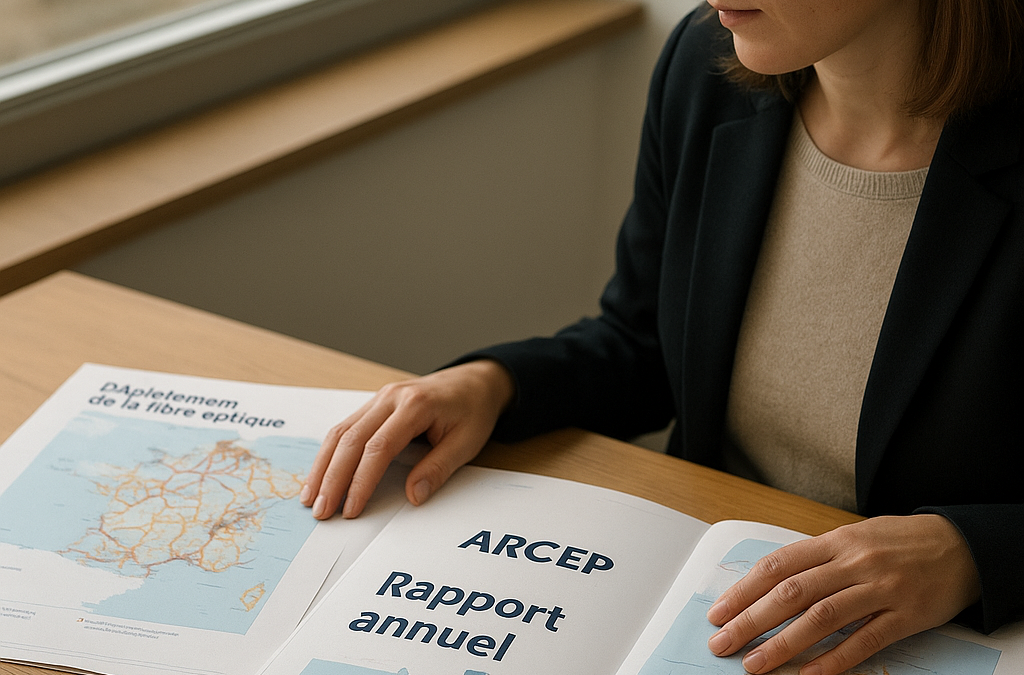
Arcep’s 2026 volume 2 annual report, Arcep regulation at the service of connected territories, says France’s mobile and fiber policy has delivered broad coverage gains, while quality and network resilience remain open issues.
The keyword Satellite & Space Connectivity appears only in Droam’s metadata here; the report itself is about terrestrial networks, public-initiative fiber, and mobile regulation.
New Deal Mobile and the 2018 licensing shift
The New Deal Mobile was announced in January 2018. It changed mobile-frequency licensing by tying it to concrete coverage and service-quality obligations instead of population-coverage percentages and auctions.
The targeted coverage mechanism let departments identify the priority areas that needed mobile coverage. Arcep presents that model as a break from the older licensing logic, with local authorities directly involved in defining where coverage should be improved.
Fiber buildout reached scale by end-2025
The Plan France Très Haut Débit launched in 2013. Arcep describes it as the largest investment project of the last ten years, with nearly €50 billion in spending, including nearly €13 billion from the state, local authorities, and the European Union.
By the end of 2025, more than 94% of premises in rural areas and across the rest of France were fiber-ready. Fiber accounted for 82% of fixed internet subscriptions, with 27.1 million active subscriptions.
Operational costs and quality still need work
Arcep says it is continuing work with local authorities and operators to quantify the real costs of operating public-initiative networks and to guide the relevant actors. It also says it has helped document the state of fiber-network quality through its fiber quality observatory and has been coordinating operator work on information-exchange and control processes.
Arcep also says network resilience is becoming a strategic priority because digital infrastructure is vital for the economy, public services, and democratic life. The report ties that to climate events, works-related outages, vandalism, and cyberattacks.
What this means for public-initiative network operators
Operators and local authorities running public-initiative networks now have two pressure points in view: the real cost of operation and maintenance, and the quality of the fiber builds already in the ground. Arcep is still trying to quantify the first and tighten the second.
That makes the next phase less about headline rollout and more about keeping the networks usable, resilient, and financially legible over time.