
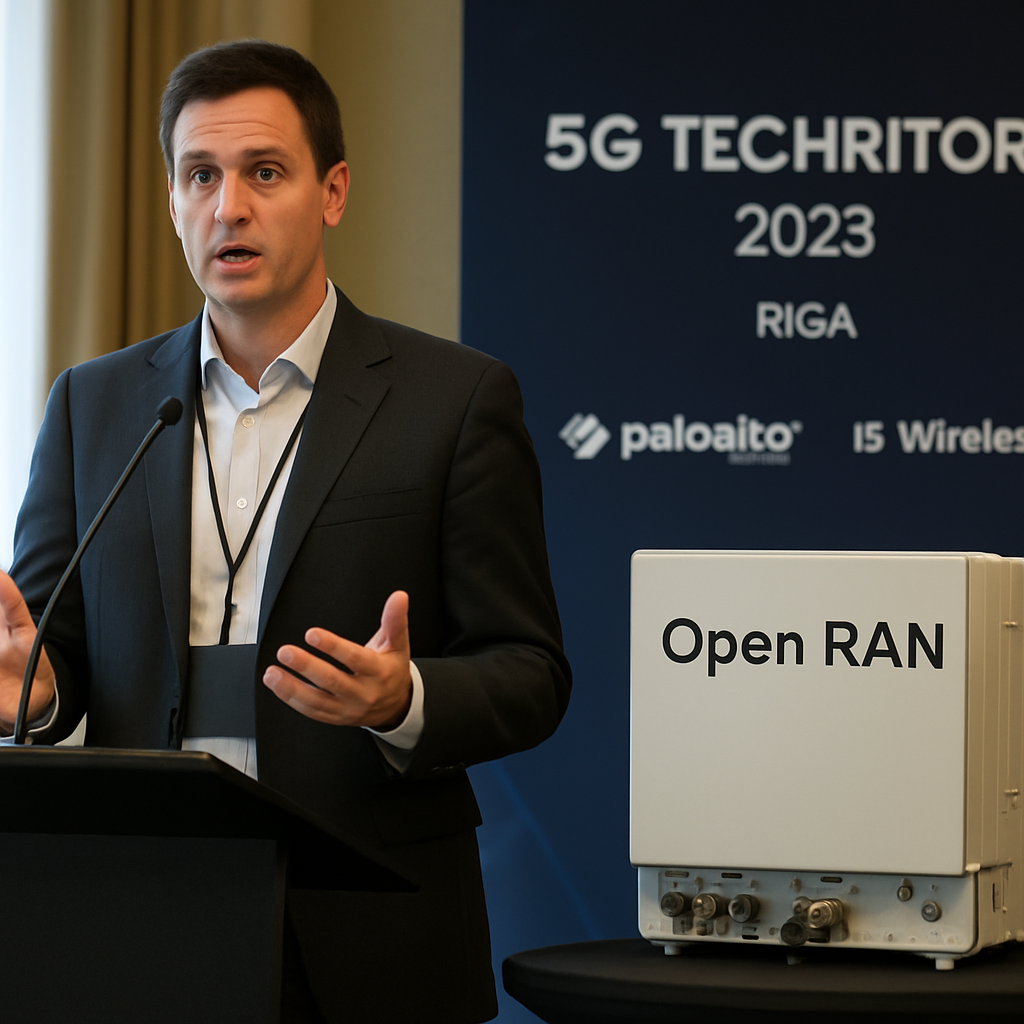
The 5G Techritory 2023 summit in Riga, Latvia, hosted a debate over whether to delay Open RAN to 2030 when 6G becomes available, with European politicians, telecom companies, service providers and industry players discussing the future of data networks in Europe.
On the cost side, LMT technical director Gun01rs Danbergs argued that Open RAN09s promise is replacing RAN boxes with equipment from many suppliers would drive prices down, while Danbergs also said LMT is worried about putting smaller manufacturers on its network. On the security side, Palo Alto Networks mobile network security consultant Piotr Linke said Open RAN is based heavily on open-source technologies to reduce costs, that extra vigilance is needed when a product is open source, and that suppliers he encounters do not even include a data-encryption system because they say it is not part of the standard; he also described Open RAN as a platform that runs services in containers or VMs that must be secured and monitored, warning that attempts to lower prices can lead to compromises that could harm security.
IS-Wireless CEO Slawomir Pietrzyk pushed back, saying the topic is not to provide solutions to operators but to equip private 5G or 4G networks. Pietrzyk said IS-Wireless is among the only European companies, together with the French Amarisoft-Rapid.Space, that can manufacture alternative RAN boxes to those of historical telecom equipment makers; he also said Open RAN pioneers erred by targeting the operator market and that innovation is in private use-cases, adding that IS-Wireless expects a proven solution when operators renew contracts in the second half of the decade and that, when 6G arrives around 2030, goals to better serve connected objects and the edge will take off because private radio networks deployed across Europe will already exist thanks to 5G WAN aggregation similar to IS-Wireless09s solutions.