
SES completed Rendez-vous 1 (RDV1) under the European Union’s IRIS² program and expects its total capital commitment for the MEO constellation layer to reach up to €1.35 billion.
The spending covers procurement and deployment of 18 MEO satellites, with service entry targeted for 2030. SES said its 2026 investment share remains within its previously stated fiscal year 2026 capital expenditure outlook.
The company also said the 2026 investment share benefits from European public funding and built-in financial risk mitigation mechanisms. SES said the commercial contract is structured to deliver an internal rate of return meeting or exceeding its 10% hurdle rate requirement, and that it retains commercial monetization rights for approximately 90% of the MEO constellation’s operational capacity.
SES ties the IRIS² build to its wider MEO base
Adel Al-Saleh, chief executive of SES, said RDV1 is an important step toward delivering Europe’s secure, sovereign connectivity infrastructure. He said IRIS² builds on SES’s leadership in MEO and reinforces its long-term vision for secure, resilient and high-performance connectivity.
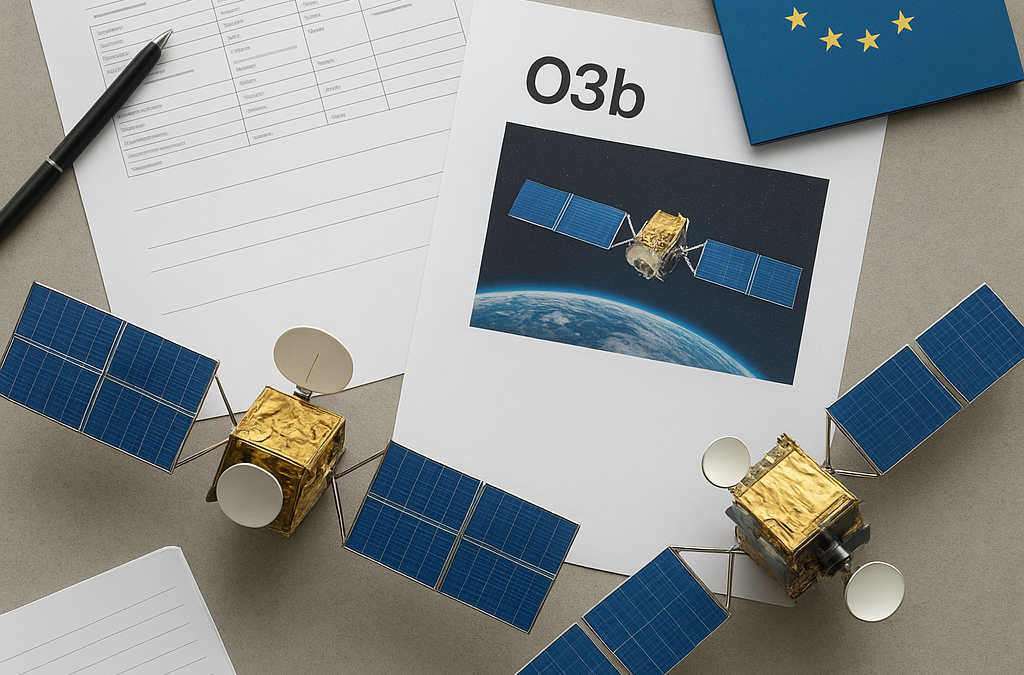
Al-Saleh also said the program positions SES to address evolving government and commercial requirements while supporting Europe’s ambitions for secure and sovereign multi-orbit communications. SES said its existing O3b fleet and meoSphere roadmap are part of that broader IRIS² positioning.
What this means for satellite procurement watchers
The disclosed €1.35 billion ceiling, 18-satellite scope, and 2030 service target give buyers and competitors a concrete read on the scale and timing of SES’s MEO commitment. The contract structure also shows that SES is targeting an internal rate of return at or above its 10% hurdle rate while retaining monetization rights over most of the operational capacity.