
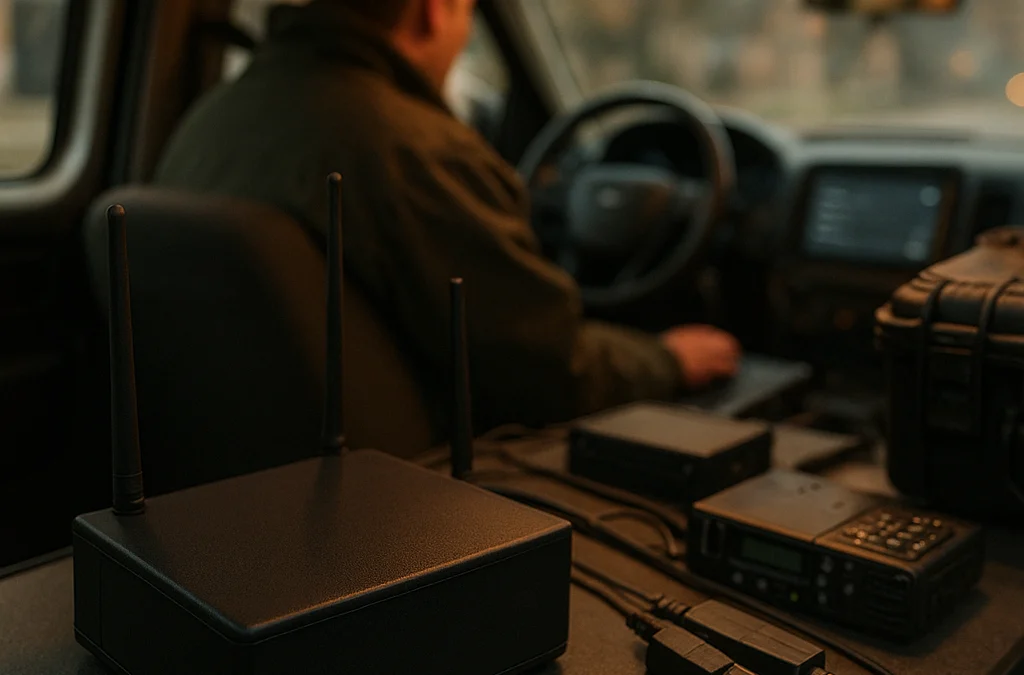
SA Power Networks and Wyoming Highway Patrol both moved to hybrid cellular and satellite connectivity for vehicles and field operations. SA Power Networks said its managed setup includes satellite and 5G to meet service-level agreements, while Wyoming Highway Patrol installed a dual-modem router with LEO satellite failover in its mobile command center (via www.itnews.com.au).
SA Power Networks said its Cradlepoint 5G and LEO satellite setup is saving field workers time, including an estimated 1,845 hours a year on digital field switching, 1,844 hours a year on job close-out and approvals, and 1,230 hours a year on travel to find a connection. Wyoming Highway Patrol said it tested different solutions to find the best configurability, control, and front-end performance for mobile work environments, and it said it no longer gets calls about lack of connectivity after starting to use Ericsson Cradlepoint routers.
Ericsson and UK Connect deployed SARNET for Surrey Search and Rescue, using Ericsson Cradlepoint vehicle routers with dual-SIM design and satellite failover. The setup can cut response times by as much as an hour and supports real-time coordination, live streaming of drone footage, and faster deployment of search assets.
What it means for U.S. buyers
For U.S. fleet and public-safety buyers, the decision here is not about a single access network; it is about whether cellular-plus-satellite failover is good enough to support operations when vehicles leave coverage. Wyoming Highway Patrol’s build shows that procurement teams may judge these systems on configurability, control, and front-end performance as much as on raw link availability.
SA Power Networks’ hours saved also point to a buyer question that can be measured after deployment: whether better field connectivity reduces travel, delays, and administrative overhead. That is the kind of operational outcome U.S. buyers can compare against their own service-level targets and field workflows.
Droam Perspective
For fleet operators and emergency-response teams, the common thread is that hybrid connectivity is being bought as an operational control layer, not a connectivity experiment. The claims here center on failover, visibility, and field productivity, which are the terms buyers should expect vendors to prove in pilots and contracts.