
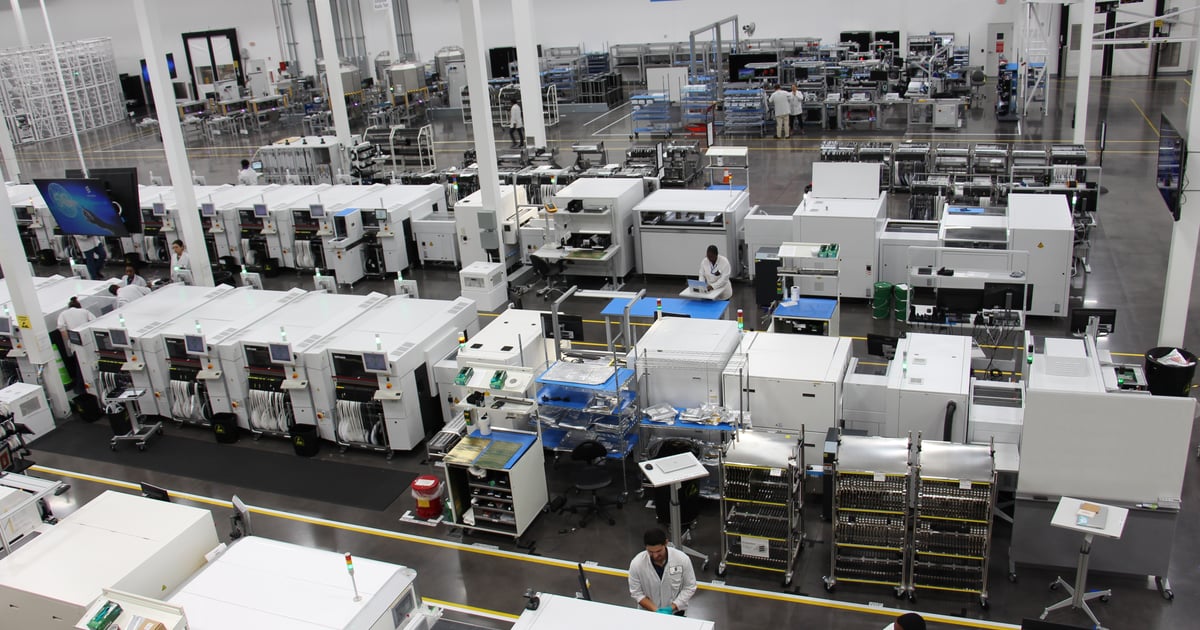
Ericsson has stopped manufacturing millimeter wave radios at its 5G smart factory in Lewisville, Texas, and consolidated production at its site in Estonia. Ericsson said the change was a production-footprint decision and does not mean it is discontinuing its mmWave portfolio. The company also said it continues to support customers with mmWave solutions (via Light Reading).
Ericsson opened the Lewisville factory in 2020 for U.S. customers, and the first products off the line were mmWave radios. Verizon was the first carrier to receive a 5G base station made at the plant. Ericsson also said it continuously assesses trade and tariff developments and takes measures to manage potential impacts while maintaining continuity for customers.
Verizon is reevaluating mmWave for fixed wireless access. On its latest investor call, Verizon CEO Dan Schulman said a technological breakthrough could extend 1 Gbit/s broadband availability to 10 million to 15 million more premises. Verizon CTO Yago Tenorio also said mmWave will keep the same role in 6G that it has in 5G, mainly providing capacity in hotspots such as stadiums, and said Verizon has tested mmWave for sensing and drone detection in separate trials with Nokia and Qualcomm.
| Fact | Value |
|---|---|
| Factory | Lewisville, Texas |
| Opened | 2020 |
| Factory investment | $150 million |
| Employees | About 500 |
| Broadband reach | 10 million to 15 million more premises |
U.S. carrier sourcing shifts around mmWave
For U.S. wireless carriers, the development touches mmWave sourcing and how much of the supply chain sits inside the country. Ericsson moved production out of Texas, but it said the portfolio stays in place and that it continues to support customers.
Verizon’s reevaluation of mmWave for fixed wireless access keeps the band in play for broadband plans, even as the production footprint changes. The company’s latest comments point to ongoing testing of mmWave uses rather than a retreat from the technology.
Ericsson keeps the portfolio, not the Texas line
For wireless carriers, the interesting part is the split between product continuity and manufacturing location. Ericsson is keeping mmWave in its portfolio while moving the radios out of Lewisville and into Estonia.
The company’s statement is also a reminder that Ericsson is not disclosing product-specific volumes or delivery arrangements, so the move should be read as a footprint change rather than a public demand signal. The Lewisville factory still matters as part of Ericsson’s U.S. manufacturing history, but not for these radios anymore.
Verizon’s mmWave work is broader than FWA
Verizon’s comments show that mmWave is not limited to one use case. The carrier says it is exploring new ways to extend the reach and utility of its millimeter wave deployment, especially in high-density environments like multi-dwelling units.
Tenorio’s remarks at the Brooklyn AI-Native 6G Summit add another layer: Verizon sees mmWave continuing into 6G as a capacity tool for hotspots, and it has already tested the band for sensing and drone detection with Nokia and Qualcomm.
Droam Perspective
For U.S. wireless carriers, this is a supply-chain and product-planning story, not a withdrawal from mmWave. Ericsson moved production to Estonia, but it said the portfolio remains active and that it still supports customers with mmWave solutions.
Verizon’s latest comments keep mmWave on the table for both FWA and hotspot capacity in 6G. That makes the Texas-to-Estonia shift worth watching as a manufacturing decision, while the broader technology discussion stays open inside Verizon’s network plans.