
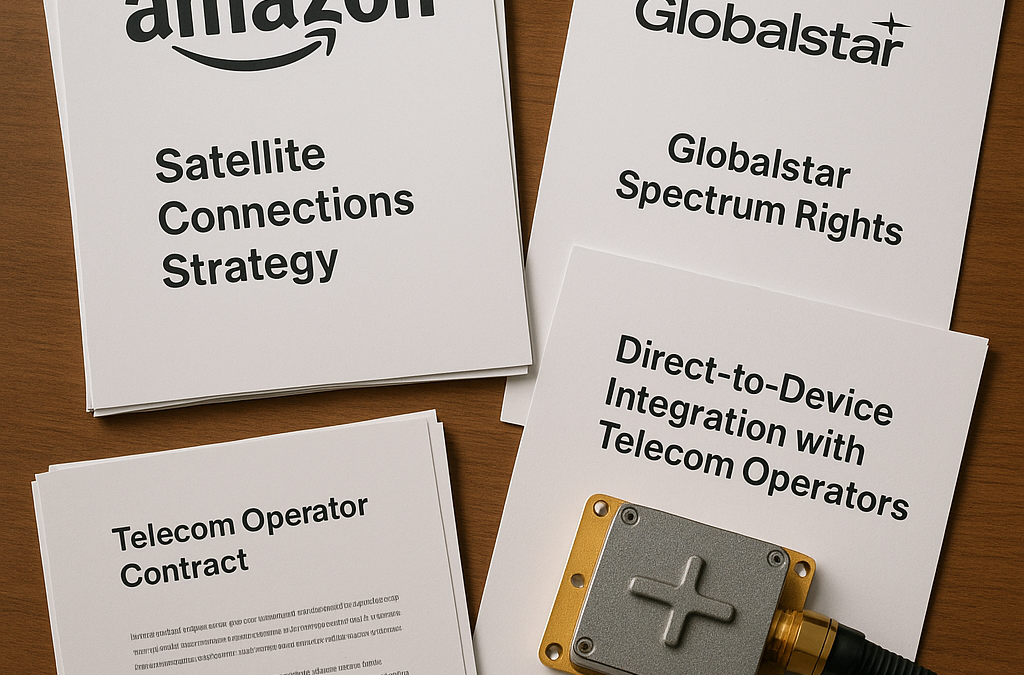
Amazon plans to launch 5,105 satellites into low-Earth orbit to create a direct-to-device constellation starting in 2028. The move puts Amazon into the same orbit as Starlink and AST SpaceMobile, but the harder problem is no longer proving that satellite connectivity works.
The newsletter says the real challenge is business-model integration with mainstream telecom infrastructure. That is the point where many D2D pitches get tested: not on coverage maps, but on whether they can fit operator networks, wholesale terms, and consumer products without becoming a one-off satellite demo.
Globalstar is part of the plan
Amazon has a pending $11.57 billion acquisition of Globalstar. The deal would bring spectrum rights, satellite assets, and telecom relationships that can reduce friction in Amazon’s direct-to-device strategy.
That matters because Amazon’s emphasis on standards, spectrum coordination, and compatibility points to a build that is meant to integrate with telecom operators rather than fight them. In other words, the constellation is being framed as infrastructure that can plug into the telco stack, not just another standalone space network.
D2D is moving toward telco integration
The article says 3GPP releases are steadily expanding non-terrestrial network capabilities, and early 6G thinking assumes convergence between satellite and terrestrial networks. Amazon’s plan sits inside that trend, even if the commercial model is still the unresolved part.
Read for satellite D2D and telco buyers
For satellite-direct-to-device vendors, the signal is that scale alone is no longer the pitch. For operators and enterprise connectivity buyers, the more relevant question is whether Amazon can turn spectrum, assets, and operator relationships into a service that fits mainstream telecom procurement.